



Active Ingredients Glossary · G
INCI: Camellia Sinensis Leaf Extract
What’s good for you in a teacup also has a firm place in skincare: green tea extract provides antioxidants that protect the skin from free radicals and has a pleasantly soothing effect. K-Beauty, in particular, has been relying on green tea and its finely ground, premium form—matcha—for years.
What is green tea extract?
Green tea comes from the tea plant Camellia sinensis. Unlike black tea, it is not fermented—which preserves a particularly high amount of polyphenols, most notably the well-studied EGCG (epigallocatechin gallate). It is precisely these plant compounds that make the extract interesting for skincare: They have antioxidant effects, meaning they neutralize free radicals caused by UV light, stress, and environmental factors.
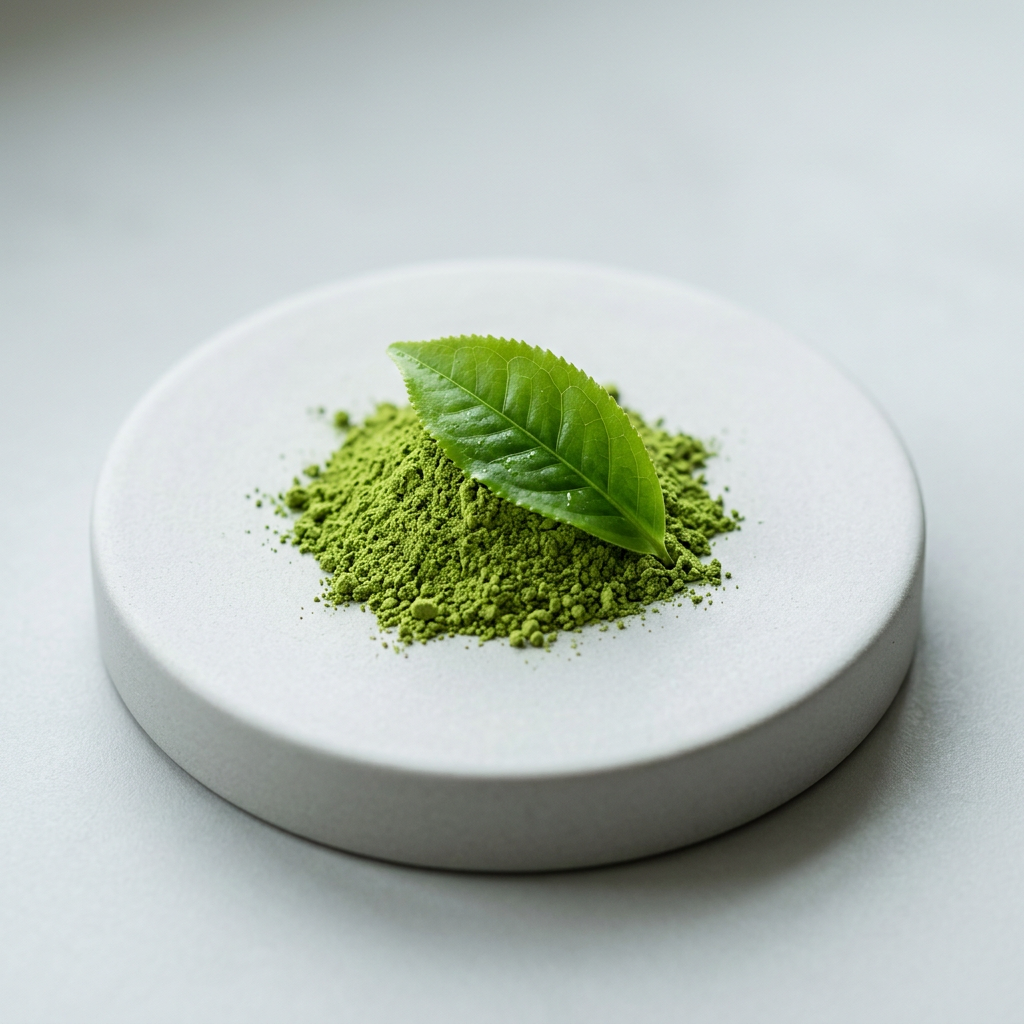
Matcha is the premium variety: shade-grown green tea that is ground into a fine powder—with a particularly high concentration of polyphenols. In cosmetics, both forms are used as extracts or powders, in products ranging from cleansing gels and toners to sheet masks. K-Beauty made green tea a staple early on—as a gentle all-rounder that complements virtually any skincare routine.
Effects: What’s Been Proven
Three out of five bars: The antioxidant effect of green tea polyphenols is very well documented in the lab, and small clinical studies show soothing and sebum-regulating effects on the skin—which is particularly beneficial for combination and oily skin. What’s missing are large, independent studies with many participants and standardized extracts. Fair assessment: Green tea is a solid, supportive active ingredient with a good safety profile—not a lone warrior, but a valuable team player in your skincare routine.
Usage & Combination
Green tea is straightforward: it can be used in the morning and evening, requires no adjustment period, and does not increase sun sensitivity. As a cleanser, it delivers its antioxidant benefits right from the cleansing step; as a sheet mask, it treats your skin to a concentrated dose of freshness—for example, after a long day or plenty of sun exposure.
Pairs well with
✓ Vitamin C—the antioxidant duo for the morning
✓ Niacinamide – complements the sebum-regulating, soothing effect
✓ Caffeine—naturally found in green tea, provides an extra boost
Note
! Extract quality and concentration vary greatly from product to product
! Intolerances are very rare—test new products on the inner elbow first
Green Tea in the BONSANA Line
Shop Now
Discover K-Beauty with green tea
Cleansers, masks, and more from the world of Korean skincare—shipped from our Swiss warehouse, delivered quickly to you.
View the K-Beauty Collection →Frequently Asked Questions About Green Tea & Matcha
What are the benefits of green tea in skincare?
Green tea extract provides polyphenols such as EGCG, which can neutralize free radicals and soothe the skin. It helps protect the skin against daily environmental stress—as a gentle ally, not a miracle cure.
Is matcha better than regular green tea?
Matcha is shade-grown, finely ground green tea with highly concentrated active ingredients. In cosmetics, however, the effect depends primarily on the formulation—a good green tea extract is hardly inferior to matcha.
What skin types is green tea suitable for?
It’s suitable for virtually all skin types. It’s particularly beneficial for combination and oily skin, as small studies show sebum-regulating effects—and for stressed, dull skin that could use an antioxidant boost.
Does green tea replace a vitamin C serum?
No. Both are antioxidants, but they work differently—vitamin C also has brightening properties and has been much more extensively researched. They’re most effective when used together: a green tea cleanser first, followed by a vitamin C serum.


