



Active Ingredients Glossary · A
INCI: Argania Spinosa Kernel Oil
It's no coincidence that argan oil is called "the gold of Morocco": The oil extracted from the kernels of the argan tree is rich in unsaturated fatty acids and vitamin E—and has been an integral part of Moroccan beauty care for centuries. Today, it's a staple in hair oils and nourishing facial oils.
What is argan oil?
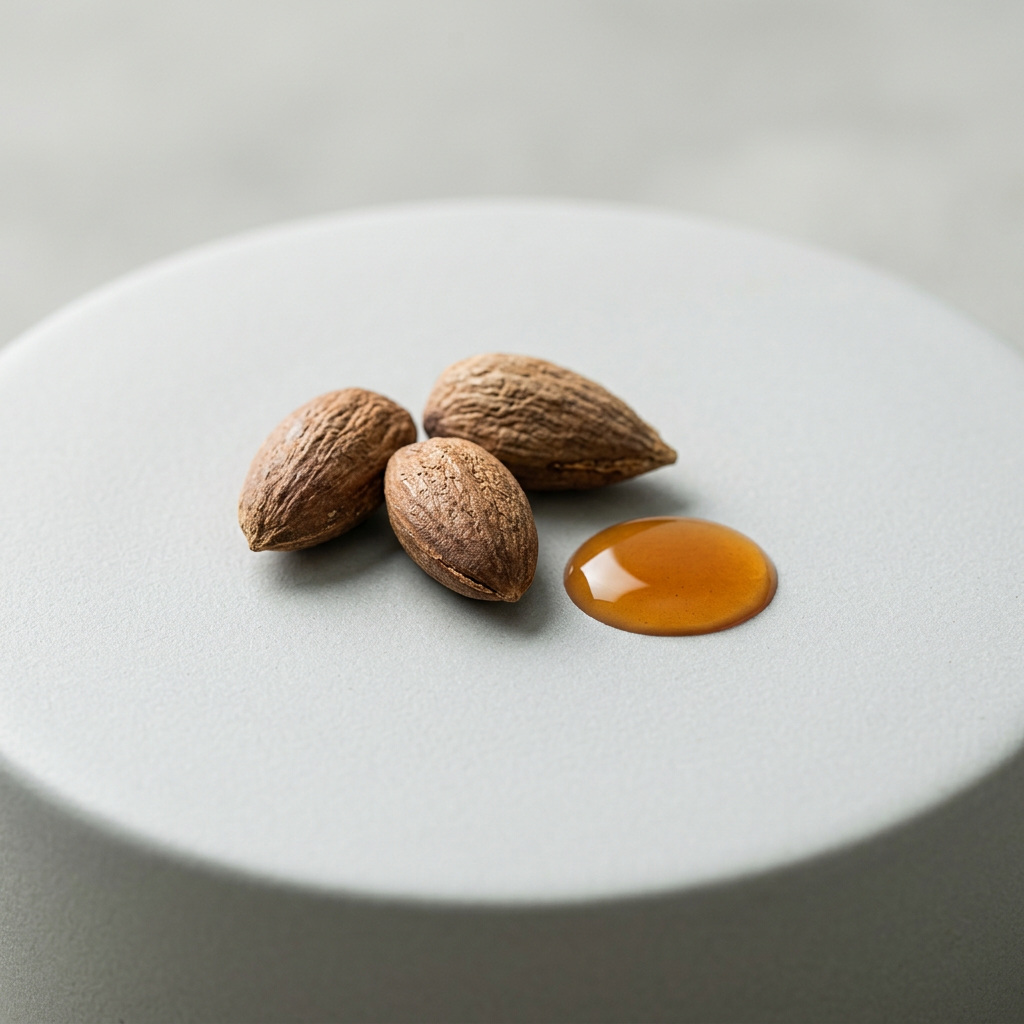
Argan oil comes from the kernels of the argan tree's fruit, which grows almost exclusively in southwestern Morocco. Extraction is labor-intensive—it takes the kernels from about 30 kilograms of fruit to produce one liter of oil—which explains its reputation as "liquid gold." Traditionally, the oil is pressed by hand by women's cooperatives.
For skincare, the composition is key: about 80 percent unsaturated fatty acids, primarily oleic and linoleic acids, plus vitamin E and plant-based compounds such as sterols and polyphenols. This blend makes argan oil a nourishing yet not overly heavy oil—richer than jojoba, lighter than coconut.
Effects: What's Been Proven
Three out of five bars: There are small clinical studies showing improved skin elasticity and hydration after regular use, along with solid laboratory data on the antioxidant effects of the vitamin E it contains. When used on hair, argan oil smooths the cuticle, restores shine, and can make hair more supple and resistant to styling stress. However, large, independent studies with many participants are lacking—as is the case with almost all plant oils. To be fair: a high-quality hair care oil with a good reputation and decent, though not spectacular, supporting data.
Application & Combination
For hair, argan oil is a classic pre-wash treatment: work it into the lengths and ends before washing, let it sit, then rinse. One to two drops also work well as a finishing touch for dry ends. On the skin, it's best used in the evening as the final step in your skincare routine or mixed into your moisturizer—especially during the colder months.
Pairs well with
✓ Coconut oil—the tried-and-true hair oil duo, such as in HAIR SYRUP Original
✓ Antioxidants like astaxanthin & CoQ10—argan as a nourishing base
✓ Hyaluronic acid—moisturize first, then finish with oil
Note
! Quality varies greatly—look for cold-pressed, cosmetic-grade argan oil
! For very fine hair, use sparingly and apply only to the ends
Argan oil in the BONSANA lineup
Shop Now
Discover Argan Hair Oils
Pre-wash oils and hair treatments with argan oil—shipped from our warehouse in Switzerland, delivered quickly to you.
Go to Hair Oils & Hair Treatments →Frequently Asked Questions About Argan Oil
Is argan oil better for hair or for skin?
It works for both. On hair, it smooths the cuticle and restores shine; on skin, it nourishes dry areas. Most people use it where it's needed most—often the ends of the hair.
Does argan oil weigh down the hair?
Less than coconut oil, more than jojoba. When used as a pre-wash, it gets rinsed out anyway; as a finishing touch, one to two drops on the ends are enough, especially for fine hair.
How can I tell if argan oil is good quality?
Cosmetic argan oil should be cold-pressed and have a subtle nutty scent. Very inexpensive products are often heavily diluted or refined—checking the INCI list (Argania Spinosa Kernel Oil listed near the top) can help.
Does argan oil clog pores?
Argan oil is considered moderately light and is well tolerated by most skin types. If you have skin that's highly prone to breakouts, always test new oils on a small area first.


