



Active Ingredients Glossary · K
INCI: Cocos Nucifera Oil
Hardly any other natural oil is as beloved—and as uncritically hyped—as coconut oil. The honest assessment: For the body and hair, it’s a powerful, well-researched conditioning oil. On the face, however, it can clog pores—we strongly advise against using it there if you have blemish-prone skin.
What is coconut oil?
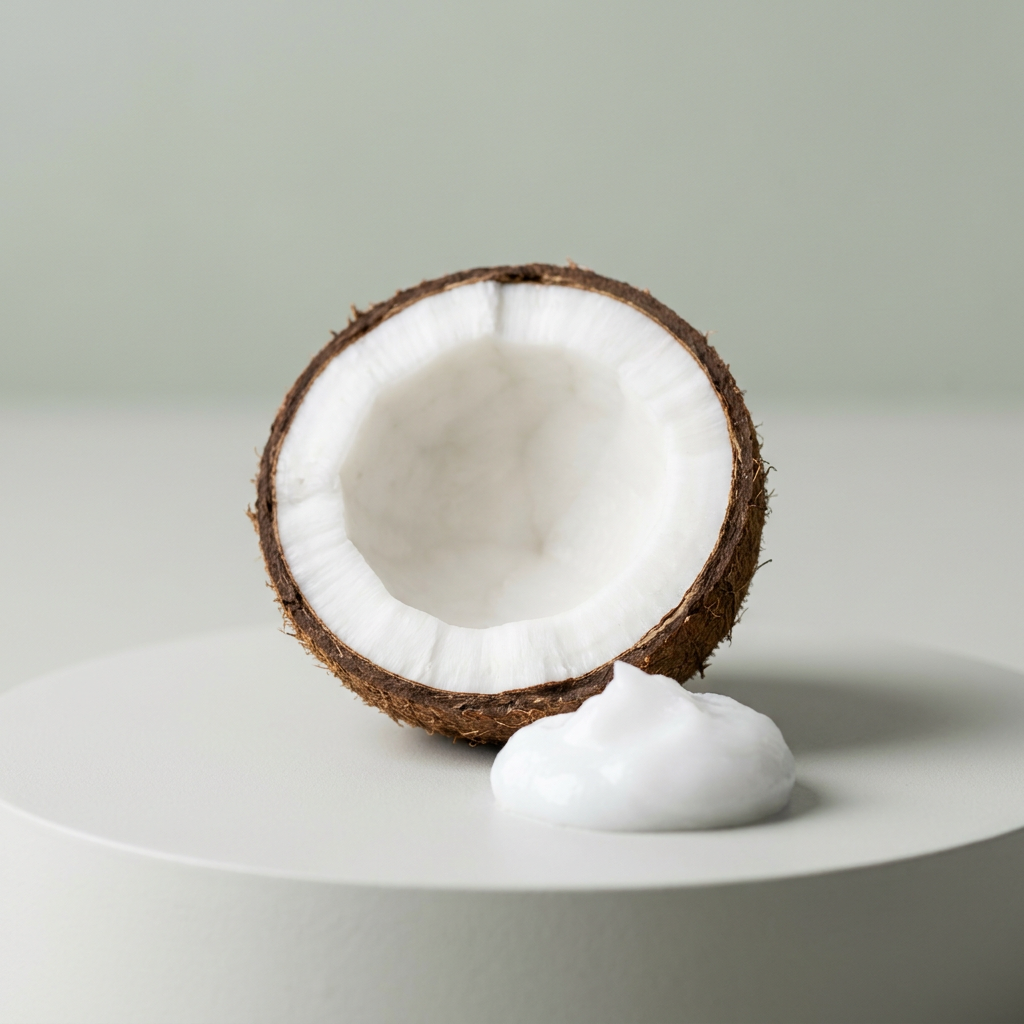
Coconut oil is extracted from the flesh of the coconut and consists primarily of saturated fatty acids—most notably lauric acid. It is solid at room temperature and only melts upon contact with the skin; this is why it immediately leaves the skin feeling rich and nourished. In cosmetics, it is used either cold-pressed (“virgin”) or refined—either pure, in body scrubs like the FRANK BODY Coconut Coffee Scrub, or in hair oils like HAIR SYRUP Original.
Its structure explains both its strengths and weaknesses: The small, saturated fatty acids make the oil particularly compatible with hair keratin, but they also tend to clog the pores on the face.
Effects: What the Evidence Shows
When it comes to hair, the evidence for this plant-based oil is remarkably strong: Coconut oil is one of the few oils for which studies show that it penetrates the hair shaft and can measurably reduce protein loss during washing—especially when used as a pre-wash treatment. On the skin, coconut oil is a proven emollient: it softens rough, dry patches and helps the skin retain moisture. So why only three out of five bars? Because the studies are small, there’s a lack of large-scale independent research—and because the effect depends heavily on where it’s applied: what makes hair shine can contribute to breakouts on the face.
Application & Combination
You can be generous when using it on your body: apply it to slightly damp skin after showering, or use it as part of a scrub right in the shower. For your hair, coconut oil works best before washing: massage it in, let it sit for at least 15 minutes, then shampoo twice. For your face: if you have blemish-prone or combination skin, it’s better to choose a lighter oil like jojoba.
Pairs well with
✓ Coffee scrubs – coconut oil nourishes while the coffee exfoliates
✓ Argan oil – the classic hair oil duo for shine and smoothness
✓ Body lotions – apply oil first, then lotion on top for long-lasting care
Note
! Coconut oil is considered comedogenic—it can clog pores on the face. If you have blemished skin or skin prone to blackheads, we honestly advise against using it there
! Coconut oil can quickly make very fine hair look stringy—use sparingly and rinse thoroughly
Coconut oil in the BONSANA lineup
Shop Now
Discover coconut body care
Scrubs, lotions, and more for velvety-soft skin—shipped from our Swiss warehouse, delivered quickly to you.
To Body Care →Frequently Asked Questions About Coconut Oil
Can I use coconut oil on my face?
It can work for dry, non-sensitive skin—but we don’t recommend it for blemished, blackhead-prone, or combination skin: Coconut oil is one of the oils with higher comedogenic potential. Jojoba oil is the better choice in those cases.
What are the benefits of coconut oil for hair?
A lot—especially before washing: Studies show that coconut oil can penetrate the hair shaft and reduce protein loss during washing. The hair stays smoother and breaks less easily.
Refined or cold-pressed—which is better?
Both are effective for hair care; cold-pressed “virgin” coconut oil retains more natural compounds and its characteristic scent. Refined oil is odorless—which is handy if you don’t like the coconut scent.
Does coconut oil help with very dry skin on the body?
Yes, as a rich emollient, it makes rough areas like elbows, knees, and shins noticeably smoother—it’s best to apply it directly after showering to slightly damp skin.


