



Active Ingredients Glossary · A
INCI: Charcoal Powder
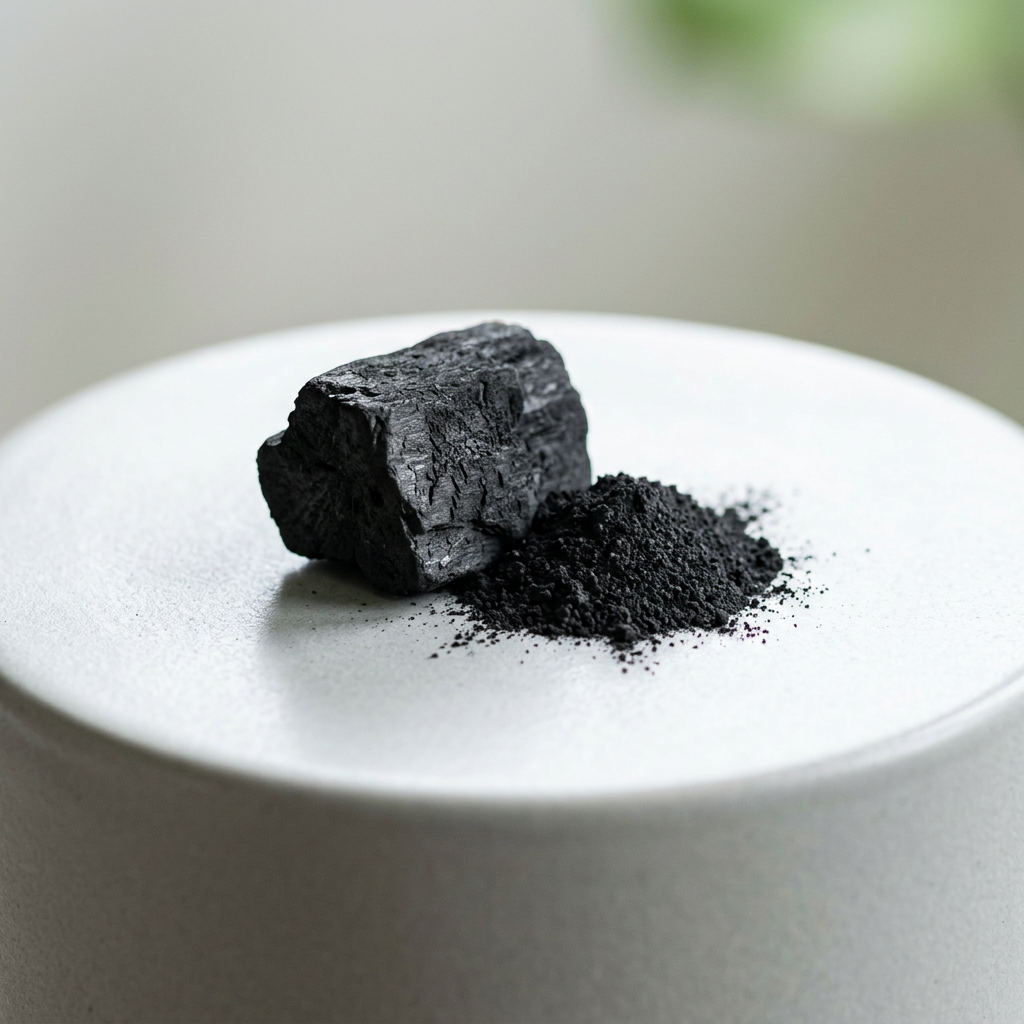
Activated charcoal is the best-known black active ingredient in cosmetics—and one of the most heavily marketed. What it can actually do: bind sebum and dirt to the skin’s surface. What it can’t do: “detoxify” the skin. Here, you’ll find an honest look at where this adsorbent is truly useful and where the marketing hype ends.
What is activated charcoal?
Activated charcoal is produced when plant-based raw materials—often coconut shells or bamboo—are carbonized and then “activated.” This process creates an extremely porous structure: a single gram of activated charcoal has an internal surface area of several hundred square meters. Oils, dirt particles, and residues adhere to this vast surface area—a process known as adsorption.
This is precisely why it’s used in cosmetics: In cleansing masks, nose strips, soaps, and peel-off products, activated charcoal binds excess sebum and impurities on the skin’s surface. The key word here is “surface”—activated charcoal does not penetrate the skin nor does it draw anything out of deeper skin layers. It simply removes what can be reached anyway when washing or peeling off the product.
Effect: What’s Proven
Two out of five bars—and that’s intentional. The adsorbing properties of activated charcoal are well-documented from a physical standpoint; in medicine, it is therefore used to treat certain types of poisoning in the gastrointestinal tract. In skincare, however, there are hardly any controlled clinical studies. The immediate effect is plausible and understandable: sebum and dirt are bound, and the skin appears more matte and fresher right after application. Long-term effects on pores or blemishes, however, are not solidly proven. To sum it up fairly: activated charcoal is a useful cleansing ingredient for oily skin—no more, but also no less.
Application & Combination
Activated charcoal falls into the “rinse-off” category: masks, strips, and cleansers that are removed after a short application time. Once to three times a week is sufficient—using it more frequently can dry out the skin because it binds the skin’s own oils along with impurities. Always follow up with moisturizer afterward.
Good Combinations
✓ Salicylic acid—works inside the pores, while activated charcoal works on the surface
✓ Niacinamide – regulates sebum over the long term; charcoal mattifies immediately
✓ Follow up with a moisturizer—this counteracts the oil-stripping effect
Note
! May further strip dry skin of oils—use sparingly
! Do not use peel-off products on irritated skin
Activated charcoal in the BONSANA lineup
Shop Now
Deep Cleansing with Activated Charcoal
Nose strips, masks, and cleansing with activated charcoal—shipped from our Swiss warehouse, delivered quickly to you.
To facial cleansing →Frequently Asked Questions About Activated Charcoal
Does activated charcoal draw toxins out of the skin?
No. The skin does not detoxify through the pores—that’s the job of the liver and kidneys. Activated charcoal binds sebum and dirt to the skin’s surface. This is a thorough cleansing, but not “detoxification.”
How often can I use activated charcoal products?
Once to three times a week is a good frequency for masks and strips. More frequent use can dry out the skin because activated charcoal binds the skin’s own oils as well as dirt.
What skin types benefit most from activated charcoal?
Oily skin and combination skin with a shiny T-zone benefit the most. Those with dry or sensitive skin should use activated charcoal only sparingly and as needed—and always follow up with moisturizer afterward.
What do charcoal nose strips really do?
Nose strips remove the visible, dark tips of blackheads and excess sebum from the nose—a real, but temporary, effect. Since the pores continue to produce sebum, regular use is crucial.


