



Everyone knows about hyaluronic acid these days—but the beauty world has long since introduced a second star ingredient for hydration: polyglutamic acid. This fermented active ingredient, often simply called PGA, gained international recognition through the K-Beauty trend and is said to bind water even better than the famous hyaluronic acid—at least that’s the promise. But is that true, and what does it mean for your skincare routine? In this guide, you’ll learn, based on facts, what polyglutamic acid is, how it works on the skin, how it really differs from hyaluronic acid, and how to use it effectively—presented honestly, without any miracle claims.
What Is Polyglutamic Acid? A Fermented Moisture-Binding Agent
Polyglutamic acid is a biopolymer—a long chain made up of many units of the amino acid glutamic acid. The substance was discovered in nattō, a traditional Japanese dish made from fermented soybeans: the stringy, gel-like substance that forms during fermentation consists largely of PGA. For cosmetic use, polyglutamic acid is now produced biotechnologically through fermentation with microorganisms—a comparatively resource-efficient, vegan manufacturing process.
In skincare, PGA is classified as a humectant: an active ingredient that attracts and binds water. Glycerin and hyaluronic acid also belong to this family. This is precisely where polyglutamic acid’s strength lies—and the reason why it is so often compared to hyaluronic acid. This active ingredient has long been established in Korean skincare routines; in Europe, it has only been appearing in serums, essences, and masks for the past few years.
Polyglutamic Acid vs. Hyaluronic Acid: An Honest Comparison
You often see headlines claiming that polyglutamic acid can bind many times more moisture than hyaluronic acid—frequently citing four to five times the amount. Such figures come from laboratory measurements of water-binding capacity and are plausible as a rough estimate. Nevertheless, the “PGA beats hyaluronic acid” narrative oversimplifies things, as the two active ingredients work differently:
- Water-binding capacity: Polyglutamic acid can hold more water per gram than hyaluronic acid. In this regard, PGA does indeed come out on top.
- Site of action: PGA molecules are very large. They do not penetrate the skin but remain on the surface. Hyaluronic acid, on the other hand, comes in various molecular sizes—short-chain variants can penetrate the upper layers of the skin and bind moisture there.
- Mode of action: Polyglutamic acid forms a film: It creates an ultra-thin, smoothing moisturizing film over the skin that stores water and slows evaporation. Hyaluronic acid, on the other hand, plumps up the upper layers of the skin from the inside out.
The honest answer to the question in the title is therefore: Polyglutamic acid outperforms hyaluronic acid in terms of pure water-binding on the surface—but it does not replace it. The two are not an either/or choice, but rather a powerful team: Hyaluronic acid nourishes the upper layers of the skin, while PGA locks in the moisture on top. Many modern formulations therefore deliberately combine both active ingredients.
How PGA Works on Your Skin
Its film-forming properties are the key to its effectiveness: After application, polyglutamic acid forms an invisible, breathable film on the skin. This film locks in water exactly where dry skin lacks it most—on the surface—while simultaneously reducing moisture loss through the skin, known as transepidermal water loss. Many people notice the results immediately: The skin feels smoother and plumper, looks fresher, and fine dryness lines appear visually reduced.
It’s important to be clear: Polyglutamic acid is a cosmetic active ingredient, not a medication. It does not permanently alter the skin’s structure and cannot “iron out” wrinkles or treat skin conditions. Its effect is a skincare benefit—noticeable as long as you use it regularly. That’s exactly what you should expect from a good moisturizer, but nothing more. For skin problems such as eczema or severe, persistent dryness, you should consult a dermatologist.
Who Will Benefit Most from This Ingredient
In general, every skin type benefits from a well-formed moisture barrier. However, this active ingredient is particularly effective in the following situations:
- Dehydrated skin: When the skin feels tight, looks dull, and makeup applies unevenly, it’s usually lacking water—not oil. This is exactly where a humectant like PGA comes in.
- Heated air and winter: Dry indoor air constantly strips moisture from the skin—a recurring issue during the Swiss heating season. The PGA film noticeably slows this loss.
- Mature skin: Over the years, the skin’s ability to retain moisture decreases. An active ingredient that locks in water on the skin’s surface and visibly reduces fine lines caused by dryness is a valuable addition here.
- Oily and combination skin: Even shiny skin can be dehydrated. The light, non-greasy texture of a PGA serum hydrates without weighing the skin down.
How to Use It: Incorporating PGA into Your Routine
PGA is easy to use and is considered very well-tolerated—even for sensitive skin. Here’s how to get the most out of it:
- Cleanse your face and leave the skin slightly damp—humectants work best when there’s water for them to bind to.
- Gently massage the PGA serum into your skin before applying richer textures.
- Finish with a cream that further seals in the bound moisture.
The most common mistake: applying the serum to completely dry skin and then not applying anything else. A humectant can only bind what’s already there—and without a finishing cream, some of the moisture will evaporate again. The three steps above are therefore not just a bonus, but the real secret.
To find out exactly where a serum fits into the sequence, check out our guide to the correct order of a skincare routine. Polyglutamic acid can be easily combined with most active ingredients: niacinamide is an ideal complement if you also want to refine your skin texture, and it also pairs well with a vitamin C serum in the morning—simply apply the PGA product afterward to lock in moisture. You can use polyglutamic acid daily, both in the morning and at night.
Serum and Sheet Mask: PGA by SKINCYCLOPEDIA
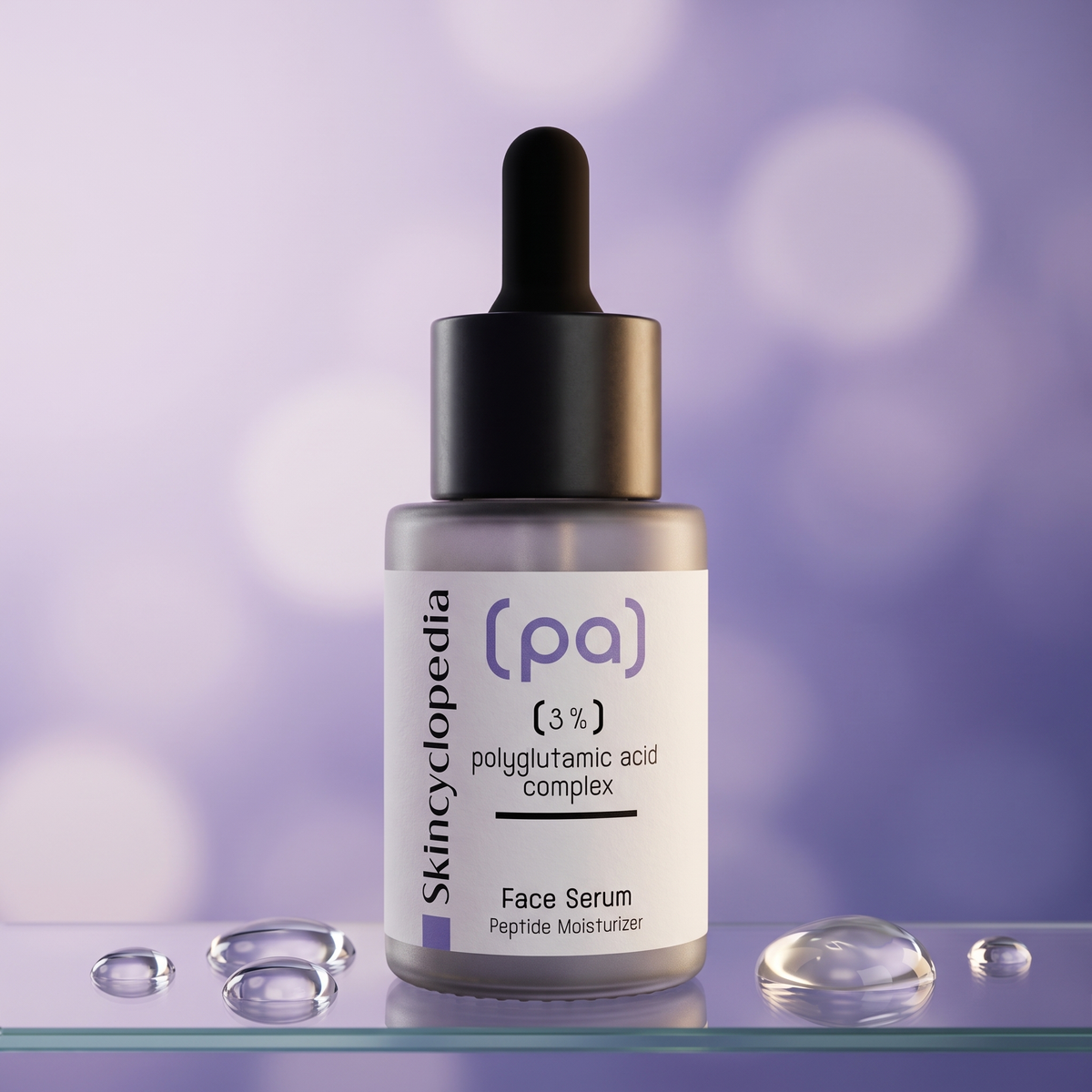
If you’d like to try this active ingredient, we offer two simple options. The SKINCYCLOPEDIA Polyglutamic Acid Serum 3% features a high concentration of PGA in a lightweight, fast-absorbing formula—ideal as a daily hydrating base under your moisturizer, on its own, or as a complement to your hyaluronic acid serum.

For a quick hydration boost in between—such as before an event, after a workout, or after a long day in dry office air—the SKINCYCLOPEDIA Polyglutamic Acid Sheet Mask is designed to do the trick: leave it on for 15 to 20 minutes, gently pat in the remaining essence, and you’re done.

Realistic Expectations: What PGA Can—and Can’t—Do
To avoid disappointment, here’s the honest assessment:
- What you can expect: intense hydration on the skin’s surface, a smooth, plump feeling immediately after application, visibly reduced dryness lines, and excellent tolerability—even when combined with other active ingredients.
- Here’s what you shouldn’t expect: permanently “filled-in” wrinkles, an effect in the deeper layers of the skin, or the treatment of skin conditions. Such promises don’t hold up to honest scrutiny—just as little with PGA as with any other cosmetic active ingredient.
Those who understand this can appreciate polyglutamic acid for what it is: one of the most powerful moisture-binding agents modern cosmetics has to offer—and a sensible complement to hyaluronic acid rather than a replacement for it.
Shop Now
Polyglutamic Acid & Co.: Discover Active Ingredient Serums
Tested serums with polyglutamic acid, niacinamide, and vitamin C—shipped from our Swiss warehouse within 24 hours.
View active ingredient serums →Frequently Asked Questions About Polyglutamic Acid
Is polyglutamic acid better than hyaluronic acid?
In terms of pure water-binding capacity on the skin’s surface, yes—PGA can hold more moisture per gram than hyaluronic acid. However, it does not penetrate the skin, whereas hyaluronic acid also works in the upper layers of the skin. So neither active ingredient is “better” across the board; the combination yields the best results.
What does polyglutamic acid do for the skin?
It forms a fine, invisible moisture film that locks in water and reduces evaporation through the skin. This makes the skin feel smoother and plumper, and fine lines caused by dryness appear visibly reduced—a cosmetic benefit that is maintained with regular use.
Can I use polyglutamic acid and hyaluronic acid together?
Yes, the two actually complement each other perfectly: hyaluronic acid hydrates the upper layers of the skin, while polyglutamic acid seals in moisture at the surface like a lid. Apply the hyaluronic acid serum first, followed by the PGA product—or use a formulation that contains both.
What skin types is polyglutamic acid suitable for?
Basically, all skin types: PGA is considered low-irritating and very well-tolerated—even sensitive, dry, or mature skin benefits from it. Even oily skin needs moisture; the light, non-greasy texture of a PGA serum is often more comfortable for this than a rich cream.
How often should I use polyglutamic acid?
Daily, in the morning and evening, on slightly damp, cleansed skin. Follow up with a cream to prevent the locked-in moisture from evaporating. For an extra boost, use a sheet mask containing polyglutamic acid once or twice a week.
For Retailers: Do you run a perfume shop, pharmacy, drugstore, or online beauty store in Switzerland? As an official distributor, BONSANA supplies you with SKINCYCLOPEDIA and other curated beauty brands—become a retailer now.


