



Hardly any other active ingredient appears in as many skincare products as niacinamide—from affordable serums to luxury creams. The reason is simple: Niacinamide, also known as vitamin B3, is versatile, well-tolerated, and suitable for almost every skin type. At the same time, there are many half-truths circulating—from “the higher the concentration, the better” to the myth that niacinamide doesn’t mix well with vitamin C. In this guide, you’ll get the honest lowdown: what niacinamide can really do, what dosage makes sense, and what mistakes can undermine its effectiveness.
What Is Niacinamide and How Does It Affect the Skin?
Niacinamide is a form of vitamin B3 and one of the most thoroughly researched active ingredients in cosmetics. It can support several functions in the skin at once:
- Skin barrier: Niacinamide can support the skin’s own production of ceramides—the lipids that keep the skin supple and protect it from moisture loss.
- Pores and Sebum: For oily skin, regular use can help reduce shine and make pores appear visually refined.
- More Even Complexion: Over time, the complexion can appear more balanced and fresher, with minor redness and imperfections becoming less noticeable.
- Tolerability: Unlike acids or retinol, niacinamide is generally well-tolerated even by sensitive skin—one of the reasons for its popularity.
Important for an accurate understanding: Niacinamide is a cosmetic active ingredient, not a medication. It nourishes the skin and can improve its appearance—it does not treat acne or skin conditions. That is the responsibility of a dermatologist.
Niacinamide Dosage: What Percentage Makes Sense?
Today, you’ll see 5, 10, and sometimes even 20 percent listed on packaging—and it’s tempting to go for the highest percentage. The research tells a different story: Most well-documented effects were achieved with concentrations of 2 to 5 percent. A higher percentage doesn’t automatically mean greater effectiveness—but it does carry a higher risk of redness and irritation, especially for sensitive skin.
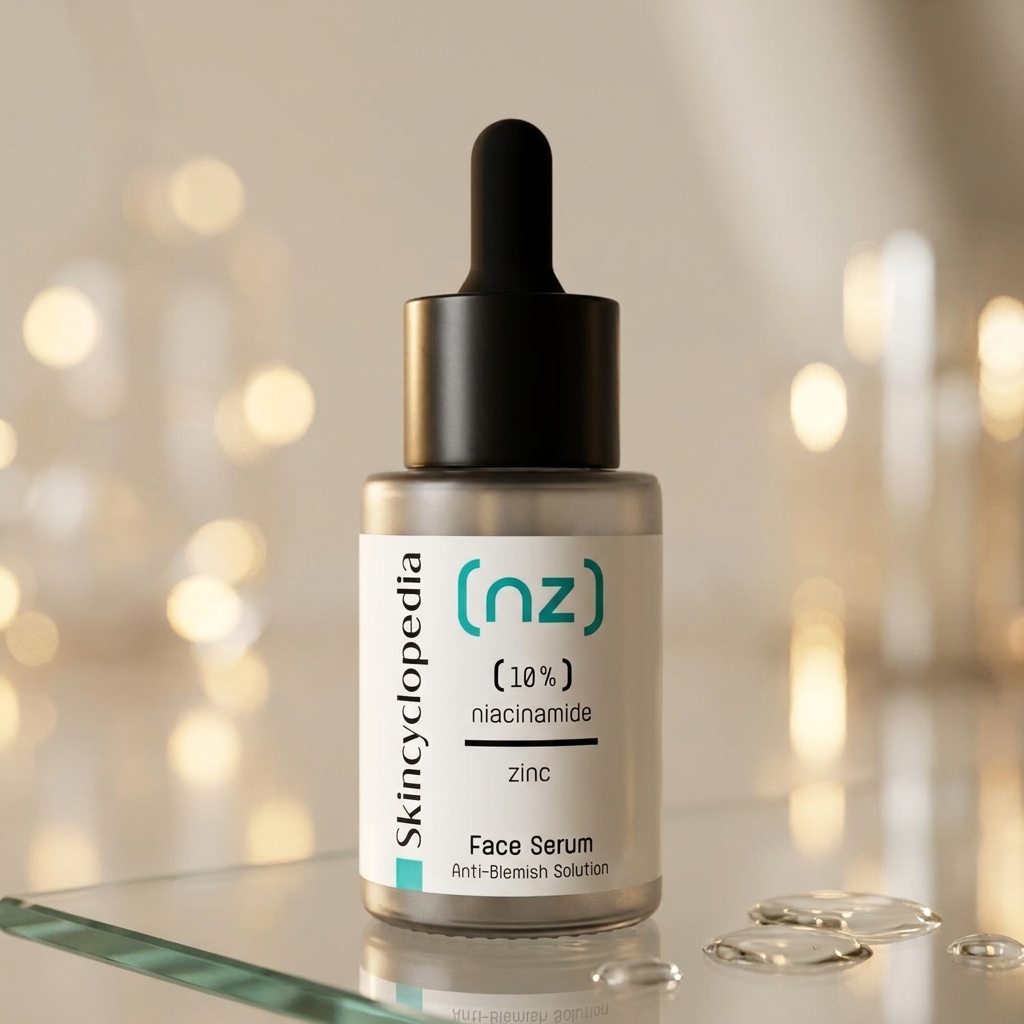
As a rule of thumb: For beginners and those with sensitive skin, 2 to 5 percent is perfectly sufficient. Resilient, oily skin with visible pores can handle up to 10 percent—as in the SKINCYCLOPEDIA Niacinamide 10% Serum with Zinc. The combination with zinc was deliberately chosen here: Zinc PCA complements niacinamide for oily, blemish-prone skin and makes the serum a targeted treatment for the T-zone. Anything above 10 percent is unnecessary for the vast majority of people.

The Most Common Mistakes with Niacinamide—and How to Avoid Them
- Starting too high: If you’ve never used niacinamide before and jump straight to 10 or 20 percent, you risk redness and a burning sensation (“flushing”). It’s better to start low and let your skin adjust.
- Using everything at once: Niacinamide, vitamin C, acid peels, and retinol all on the same night—that’s too much for any skin. One to two active ingredients per routine are enough.
- The Vitamin C Myth: The claim that niacinamide and vitamin C neutralize each other stems from lab tests in the 1960s using unstable formulations and high heat. In modern products, the combination poses no problem—many routines use vitamin C in the morning and niacinamide in the evening, simply for the sake of organization.
- Not Enough Patience: Niacinamide is a long-distance runner. The first effects appear after four weeks of consistent use at the earliest, with more noticeable results after eight to twelve weeks.
- Wrong order: A serum should be applied after cleansing and before your moisturizer. Our guide to skincare order will show you how to set up your routine correctly.
Combining niacinamide: These active ingredients pair well with it
Niacinamide is a team player. These combinations are particularly effective:
- Hyaluronic acid and ceramides: Hydration plus barrier care—the simplest combination for almost any skin type.
- Vitamin C: in the morning for freshness and a glow, niacinamide in the evening. Read our guide to vitamin C serums to learn exactly what vitamin C does.
- Sunscreen: The SKINCYCLOPEDIA SPF 30 Serum with niacinamide combines UV protection directly with the active ingredient—convenient for the morning.
- As an in-between mask: The SKINCYCLOPEDIA Niacinamide Sheet Mask delivers the active ingredient in 15 minutes—ideal as a supplement on days when your skin needs extra care.
It’s no coincidence, by the way, that niacinamide is a staple of many Korean skincare routines—for example, on the path to the “glass skin” look, which we explain step by step in our guide to the glass skin routine.
Available in the shop
Active Ingredient Serums from SKINCYCLOPEDIA
Niacinamide, vitamin C, and more—fair prices, shipped from our Swiss warehouse within 24 hours.
View active ingredient serums →Frequently Asked Questions About Niacinamide
How quickly does niacinamide work?
Plan on four to eight weeks of consistent use before assessing the results. Niacinamide works slowly and cumulatively—a fresher, more even complexion will become apparent over time, not overnight.
Can I use niacinamide every day?
Yes, and if your skin tolerates it well, you can even use it twice a day. Start by applying it in the evening and only increase the frequency once your skin has adapted to the active ingredient without any issues.
Is niacinamide compatible with vitamin C?
Yes. The supposed conflict is based on outdated lab studies and doesn’t apply to modern formulations. If you want to play it safe, use vitamin C in the morning and niacinamide in the evening.
What skin types is niacinamide suitable for?
Almost all skin types: Oily and blemish-prone skin benefits from its sebum-regulating properties, dry skin from its barrier-supporting effects, and sensitive skin from its high tolerability. Caution is advised only at very high doses.
Should I use niacinamide in the morning or at night?
Both are possible. A tried-and-true approach: use a lightweight product with sunscreen in the morning, and apply the serum after cleansing in the evening. Consistency is key, not the time of day.
For Retailers: Do you run a pharmacy, drugstore, perfume shop, or online beauty store in Switzerland? As an official distributor, BONSANA supplies you with SKINCYCLOPEDIA and other curated beauty brands—become a retailer now.


