



Ingredient Encyclopedia · S
INCI: Butyrospermum Parkii Butter
Shea butter is a skin-care oil derived from the nuts of the West African shea tree—used there for generations in skin and hair care, and here a staple ingredient in rich creams and body lotions. It provides exactly the lipids that dry skin lacks and is one of the most well-established skin-care oils in existence.
What is shea butter?
Shea butter is extracted from the kernels of the fruit of the shea tree, which grows in the savanna region of West Africa—traditionally by hand, often by women's cooperatives. Chemically, it is a vegetable fat composed of oleic and stearic acids with one distinctive feature: an unusually high proportion of unsaponifiable components such as triterpenes and vitamin E, to which its nourishing and soothing properties are attributed.
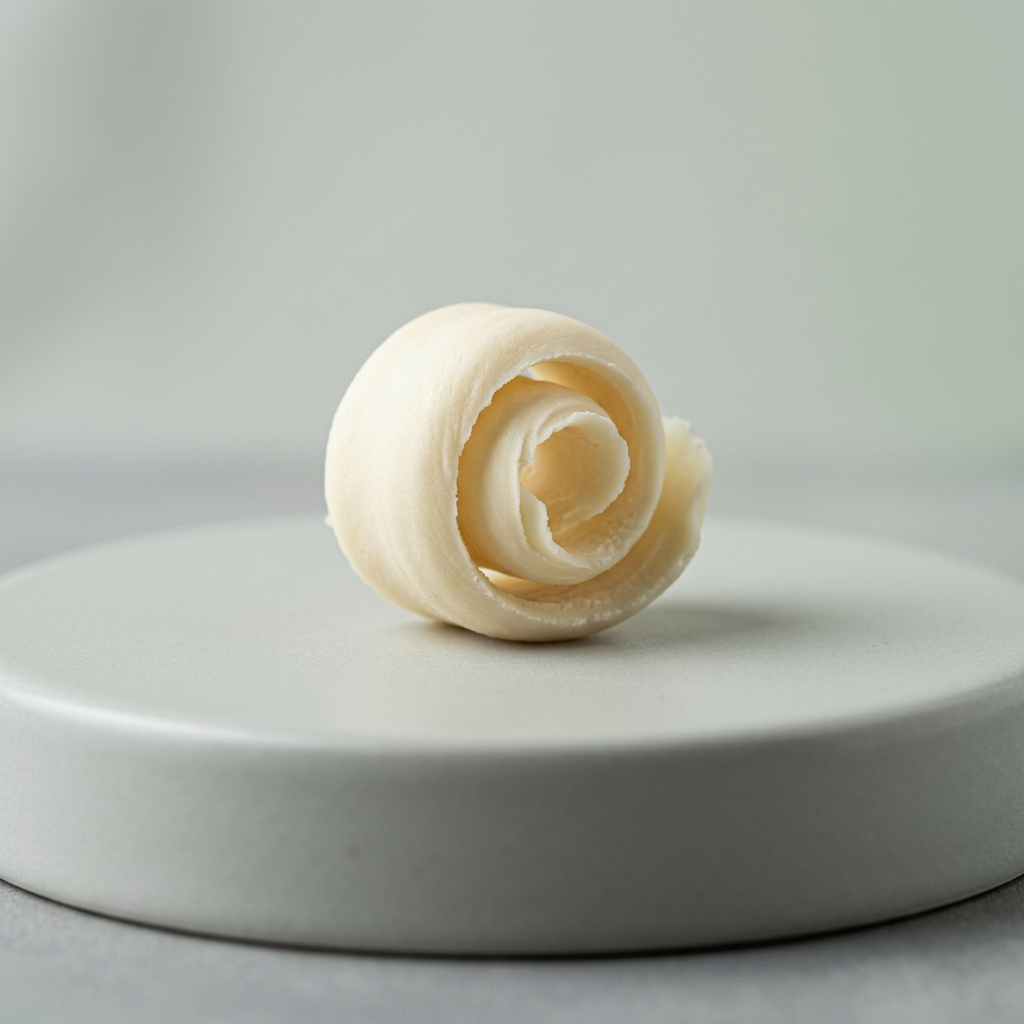
In cosmetics, shea butter is used in either refined or unrefined form. Refined shea butter is odorless and lighter in color, while unrefined shea butter retains more of these accompanying substances and its natural nutty scent—the refined form is typically used in creams and lotions. A practical benefit for skincare: Shea butter melts at about skin temperature and can therefore be easily spread despite its firm consistency.
Effects: What's Backed by Evidence
Four out of five bars: As an emollient and mildly occlusive moisturizer, shea butter is very well supported by evidence. It reduces water loss through the skin, smooths rough, flaky areas, and supports the skin barrier—effects that have been consistently demonstrated in studies on dry and stressed skin. Laboratory data primarily support the anti-inflammatory properties of triterpenes; large-scale clinical studies in humans are still lacking in this area. For skin conditions such as atopic dermatitis, shea butter can be used as a complementary treatment but does not replace medical treatment.
Usage & Combination
Its forte is body care: feet, elbows, shins, hands—shea butter really shines wherever skin becomes rough. It's best to apply it after a shower to slightly damp skin, so it immediately locks in moisture. For the face, it's suitable for dry skin, usually in lightly formulated creams.
Pairs well with
✓ Glycerin & hyaluronic acid—moisturizing agents underneath, shea butter seals in moisture on top
✓ Retinol & acids – rich care helps soothe irritation, even after a foot peel
✓ Vitamin E – a natural ingredient and the perfect partner for any lipid-based skincare
Note
! Pure shea butter may be too rich for blemish-prone facial skin—it's fine for the body
! Contact allergies to shea butter are very rare—but if you have a known nut allergy, test new products in the crook of your arm first
Shea Butter in the BONSANA Line
Shop Now
Nourishing Body Care
Body lotions, creams, and masks with shea butter—trusted brands, ready to ship from our Swiss warehouse.
Body Care →Frequently Asked Questions About Shea Butter
Is shea butter comedogenic?
Pure shea butter is rich and may be too heavy for facial skin prone to breakouts. In finished formulations, it's usually used in lower concentrations and is much less likely to cause problems. For the body, this is rarely an issue—shea butter is suitable for virtually all skin types.
Refined or unrefined shea butter—which is better?
Both have their place. Unrefined shea butter retains more natural compounds, but has a nutty smell and varies in quality. Refined shea butter is odorless and stable—which is why most creams and lotions use it without losing any of their skincare benefits.
Can I use shea butter on my face?
Yes, for dry to normal skin—ideally in a cream formulated for that purpose rather than on its own. For oily or blemish-prone skin, lighter textures are the better choice.
Is shea butter a problem if I have a nut allergy?
Documented allergic reactions to shea butter are very rare, as the allergenic proteins are largely removed during processing. However, anyone with a nut allergy should still test new products on a small area of skin first—if in doubt, consult a doctor.


