



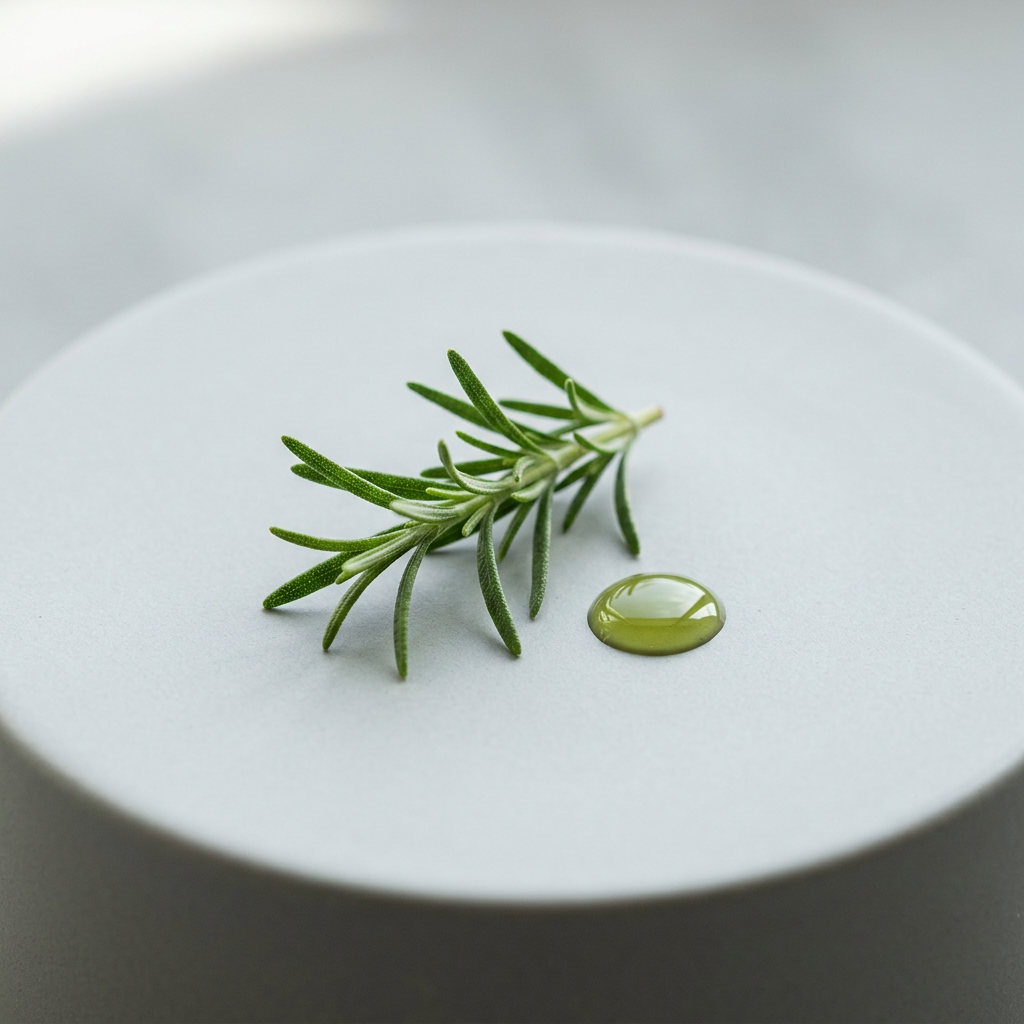
Active Ingredients Glossary · R
INCI: Rosmarinus Officinalis Leaf Oil
Rosemary has gone from being a culinary herb to a scalp favorite—hardly any hair oil trend in recent years has been complete without this aromatic Mediterranean herb. Rosemary oil nourishes the scalp, provides an invigorating, refreshing sensation when massaged in, and has an unmistakable herbal scent. Here’s what’s behind it—and what you should make of the big promises.
What is rosemary?
Rosmarinus officinalis is an evergreen shrub native to the Mediterranean region, whose leaves yield an intensely fragrant essential oil. In addition to the oil, rosemary contains antioxidants such as carnosol and rosmarinic acid. In hair care, the leaf oil is usually diluted in a carrier oil and used as a pre-wash treatment that is massaged into the scalp before shampooing.
Rosemary oil gained popularity through social media: hardly any other hair care trend has been shared as often in recent years. The reason for the hype is a handful of studies that attribute scalp-nourishing properties to the oil—and a ritual that simply feels good: oil, massage, twenty minutes of relaxation.
Effectiveness: What’s Been Proven
Three out of five bars—and honesty is key here: There are a few small studies on rosemary oil applied to the scalp that are often cited but are methodologically limited. Large, independent confirmations are lacking. What can be said with confidence: Rosemary oil nourishes the scalp; massaging it in provides a noticeably invigorating, nourished sensation on the scalp; and the herb’s antioxidants are well characterized. You won’t find any promises of hair growth here—the evidence simply isn’t sufficient. In cases of actual hair loss, the issue should be addressed by a doctor.
Application & Combination
Traditionally used as a pre-wash: Massage the diluted oil into the scalp 15 to 30 minutes before shampooing, then shampoo thoroughly—preferably twice. Once or twice a week is sufficient. The massage is half the battle: It distributes the oil evenly and turns the ritual into a little break.
Pairs well with
✓ Caffeine shampoo – an invigorating scalp routine combining oil and cleansing
✓ Scalp massage brush – distributes the oil and enhances the feeling of freshness
✓ Light carrier oils like jojoba—this is how you properly dilute essential oil
Note
! Never apply pure rosemary essential oil directly to the scalp—always dilute it or use it as a ready-to-use hair oil
! Test on the inner elbow before first use; shorten the application time if you have a sensitive scalp
! If you’re pregnant, consult a doctor before using essential oils
Rosemary in the BONSANA lineup
Available directly in the shop
Scalp care you can feel
Hair oils, shampoos, and tools for a healthy scalp—shipped from our Swiss warehouse, delivered quickly to you.
To Scalp Care →Frequently Asked Questions About Rosemary
Does rosemary oil help with hair loss?
There isn’t sufficient evidence to support this. The studies often cited are small and have methodological limitations. Rosemary oil is a good scalp care product that offers a revitalizing ritual—if you’re experiencing actual hair loss, you should consult a doctor to determine the cause.
How do I use rosemary hair oil correctly?
As a pre-wash: Massage it into your scalp 15 to 30 minutes before shampooing, then shampoo thoroughly—preferably twice. Once or twice a week is sufficient.
Can I use rosemary oil undiluted?
No. Rosemary essential oil must always be diluted in a carrier oil—ready-to-use hair oils like Growsmary take care of the dosage for you and are already formulated to be gentle on the skin.
What hair types is rosemary suitable for?
Basically, it’s suitable for all hair types—the oil works on the scalp, not the lengths. It’s especially popular with anyone who wants to consciously care for their scalp.


