



Active Ingredients Glossary · T
INCI: Melaleuca Alternifolia Leaf Oil
Tea tree oil is the classic among botanical clarifying agents: This essential oil from Australia helps treat oily, blemish-prone skin—and is one of the few plant oils whose effects have been relatively well studied. The most important rule first: always use it diluted.
What is tea tree oil?
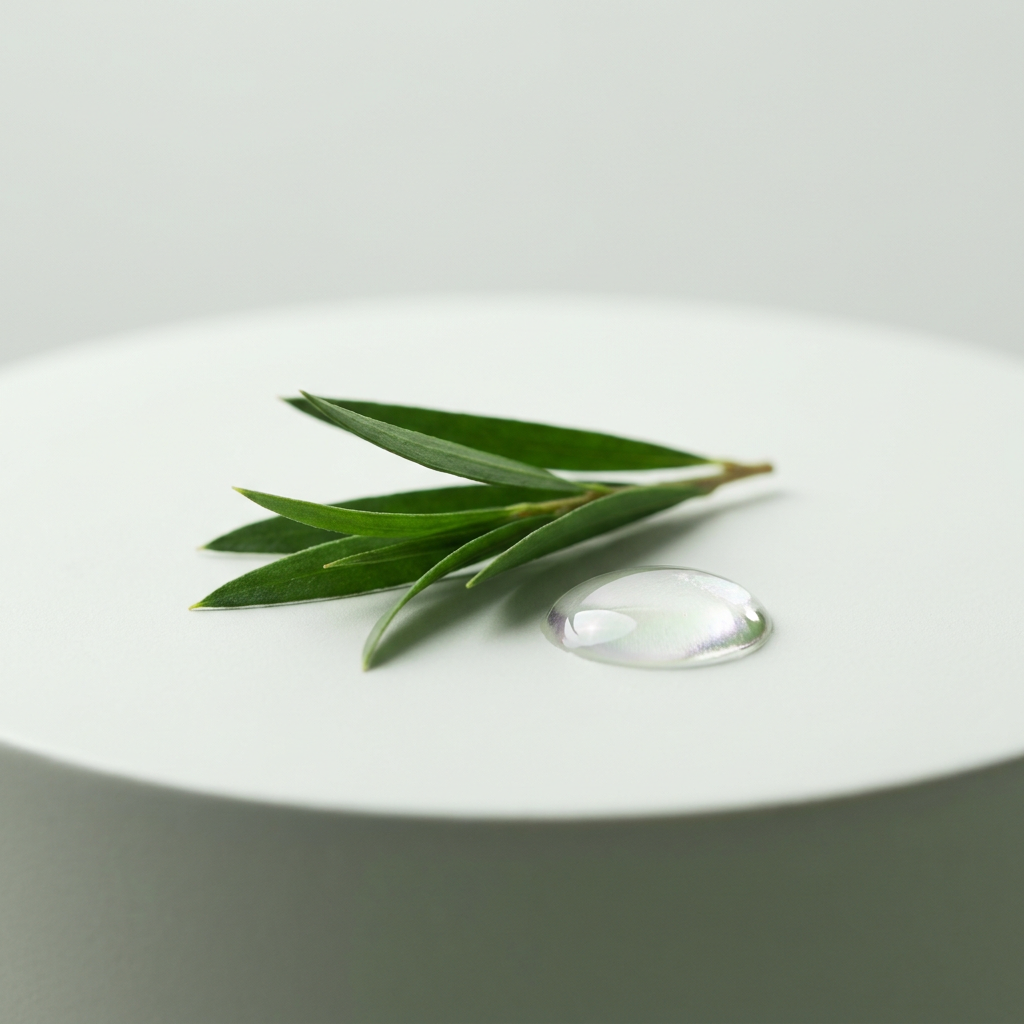
Tea tree oil is extracted via steam distillation from the leaves of Melaleuca alternifolia, a tree native to eastern Australia. Australia’s indigenous peoples used the leaves long before the oil found its way into European bathrooms. The compound primarily responsible for its purifying effect is terpinen-4-ol, which makes up about 30 to 40 percent of high-quality tea tree oil.
Incidentally, the tree has nothing to do with tea—the name dates back to early European sailors who brewed a tea-like infusion from the leaves.
Effect: What’s Been Proven
Four out of five bars—remarkable for a plant oil: Several controlled studies show that diluted tea tree oil, usually in the form of a 5-percent gel, can visibly improve the appearance of the skin in cases of mild blemishes. The clarifying properties of terpinen-4-ol are also well documented in the lab. There are two important caveats: Tea tree oil works more slowly than traditional acne-fighting ingredients, and acne is a skin condition that requires dermatological treatment—cosmetics containing tea tree oil are for skincare, not therapy.
Application & Combination
The golden rule: use it diluted. When applied undiluted, the essential oil can significantly irritate the skin—in ready-made products such as sheet masks, cleansers, or hair oils, it is already formulated in a skin-friendly concentration. Use two to three times a week or spot-treat troubled areas; test new products on the inner elbow first.
Good Combinations
✓ Salicylic acid (BHA)—clears the pores; tea tree oil rounds out the formula
✓ Niacinamide – supports sebum regulation and soothes
✓ Activated charcoal – absorbs excess sebum in cleansing masks
Note
! Never apply undiluted or over large areas of the skin—irritation and contact allergies are possible
! Do not apply near the eyes; consult a doctor if you have existing acne
Tea tree oil in the BONSANA lineup
Available in-store
Clarifying Care for Blemish-Prone Skin
Sheet masks, BHA, and more for a clearer complexion—shipped from our Swiss warehouse, delivered quickly to you.
View the Blemish-Prone Skin Collection →Frequently Asked Questions About Tea Tree Oil
Can I dab pure tea tree oil directly on pimples?
We don’t recommend this. When used undiluted, the essential oil can irritate many skin types and may trigger contact allergies. Ready-to-use products containing tea tree oil are the safer choice—they’re formulated with the correct dosage.
Does tea tree oil help with acne?
For mild breakouts, studies show visible improvements in skin appearance. However, acne is a skin condition that requires dermatological treatment—tea tree oil cosmetics can complement, but not replace, that treatment.
Is tea tree oil suitable for the scalp?
Yes, when diluted in hair oils or shampoos, it’s often used for oily or itchy scalps—for example, combined with peppermint and eucalyptus.
How do I store tea tree oil properly?
In a dark, cool place and tightly sealed. The oil oxidizes when exposed to air and light—and oxidized tea tree oil is the most common cause of skin irritation.


