



Active Ingredients Glossary · B
INCI: Cera Alba / Beeswax
Beeswax is the unsung hero in countless lip balms and creams: It forms a fine, natural protective layer that locks moisture into the skin and keeps wind and cold out. It's not a trendy ingredient, but rather a time-honored craft in cosmetics—for centuries.
What is beeswax?
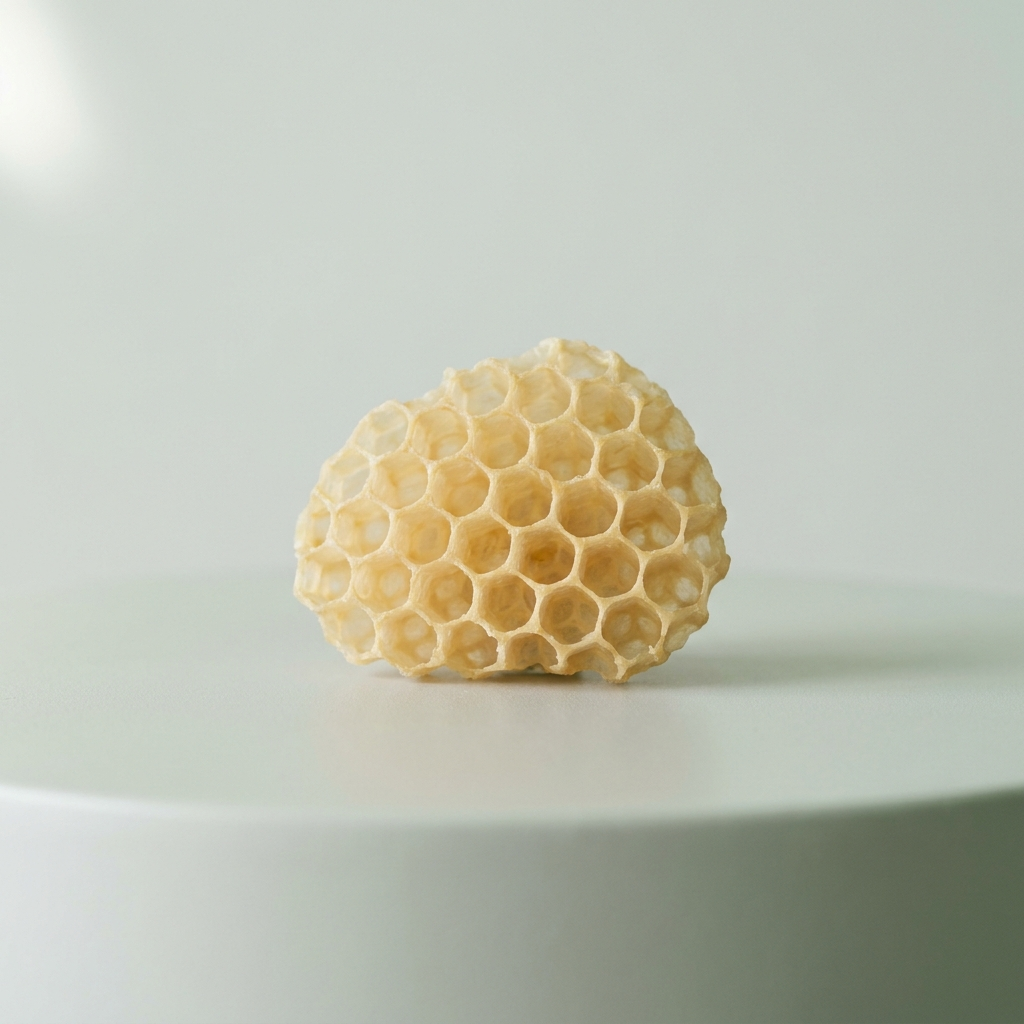
Beeswax—listed on the INCI list as Cera Alba or Beeswax—is produced by honeybees, who use it to build their honeycombs. For use in cosmetics, the wax is purified and often bleached. In balms and creams, it serves two purposes: it provides the formula with stability and consistency—and it protects the skin.
The key term here is "occlusive," literally meaning "sealing": Beeswax forms a wafer-thin, water-repellent layer on the skin and lips, thereby slowing the evaporation of moisture. What's inside stays inside. It's important to understand: Beeswax doesn't provide moisture on its own—it locks in what's already there. That's why, in good formulations, it's never used alone but is combined with nourishing ingredients like lanolin, oils, or butters, whose benefits it preserves beneath the protective layer.
Effect: What's Been Proven
Three out of five bars: As a protective agent and consistency enhancer, beeswax has been a staple in cosmetics for centuries, and the occlusive effect of waxes on the skin is well documented. Specific clinical studies on beeswax alone, however, are few and far between—it's usually evaluated as part of finished formulations. Fair summary: The protective function is plausible and proven, but you shouldn't expect any dramatic additional effects from a wax.
Usage & Combination
You can use beeswax products as often as it feels right—typically several times a day on your lips, especially before going outside in windy or cold weather. A tip for better results: Lightly moisten your lips beforehand or apply a moisturizing product underneath—this gives the wax layer something to seal in.
Pairs well with
✓ Lanolin—nourishes beneath the wax layer; the classic duo in CARMEX
✓ Cocoa butter & plant oils—provide the smoothness that the wax locks in
✓ Moisturizers like hyaluronic acid—apply first, then seal in
Note
! Not vegan—if you want a purely plant-based skincare routine, opt for candelilla or carnauba wax
! Allergic reactions to bee products are very rare—test new products on a small area first
Beeswax in the BONSANA lineup
Available in the shop
Lip care with a natural protective layer
Balm with beeswax, lanolin, and more—verified brands, ready to ship from our Swiss warehouse.
Go to Lip Care →Frequently Asked Questions About Beeswax
What exactly does "occlusive" mean?
Occlusive means "sealing": The substance forms a thin layer on the skin and slows down water evaporation. As a result, the skin loses less moisture—which is especially valuable in windy, cold, and dry conditions.
Does beeswax provide moisture?
No—and that's not a shortcoming, but rather how it works. Beeswax locks in the moisture that's already in the skin or provided by other ingredients. It works best, therefore, when combined with nourishing oils, butters, or moisturizers.
Is beeswax vegan?
No, beeswax is an animal product derived from the honeycomb of honeybees. Vegan alternatives with similar functions include plant-based waxes such as candelilla wax or carnauba wax.
Can I use lip balm with beeswax every day?
Yes, as often as you like. Beeswax requires no adjustment period, has no known interactions, and is suitable for daily use—in the morning, on the go, and as the final step in your evening routine.


