



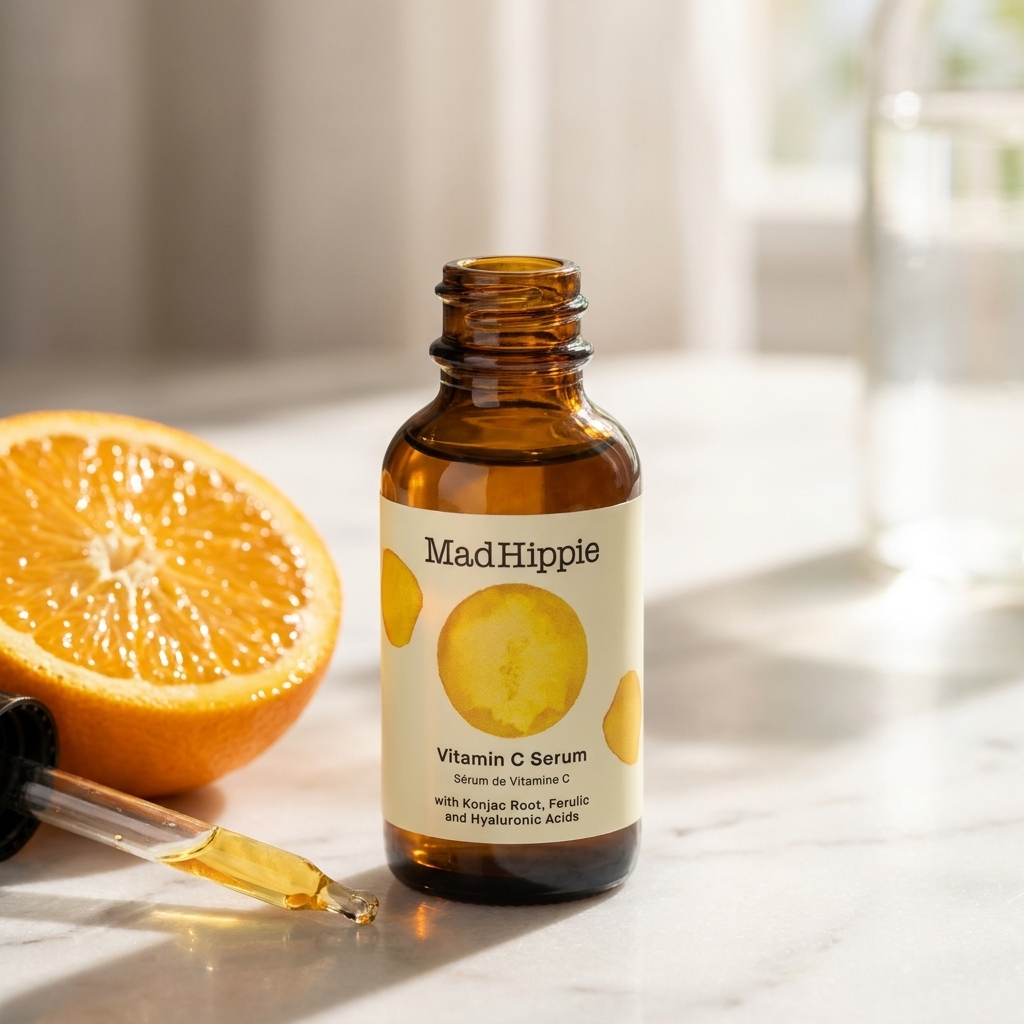
A dull complexion, the first signs of dark spots, skin that looks tired even though you’re getting enough sleep: Oxidative stress is often to blame. UV light, exhaust fumes, and everyday stress generate free radicals that take a toll on your skin day after day.
This is exactly where a vitamin C serum comes in. Few active ingredients have been studied as thoroughly—and few are used incorrectly as often. This guide shows you what really matters when it comes to formulation, order of application, and usage.
Vitamin C Serum: Effects at a Glance
Vitamin C is one of the most thoroughly researched antioxidants in skincare. It neutralizes free radicals before they can damage skin cells and collagen fibers. That’s why it’s considered a classic protective ingredient for morning use.
On top of that, there’s the visible effect: Vitamin C promotes an even, fresh complexion and counteracts dull skin. Because it can influence melanin production, it’s also used to prevent dark spots—most effectively when combined with daily sunscreen.
How to Recognize a Good Vitamin C Serum
Vitamin C is effective but sensitive: light, air, and heat cause it to oxidize. Whether a serum delivers on its promises therefore depends on its formulation. Here’s what you should look for:
- Stable form of vitamin C: In addition to pure ascorbic acid, there are more stable derivatives such as sodium ascorbyl phosphate, which are gentler on the skin and oxidize more slowly.
- Vitamin E plus ferulic acid: The famous antioxidant trio. Ferulic acid stabilizes vitamins C and E—and together, the three reinforce each other’s antioxidant effects.
- Airtight packaging: A pump dispenser or airless bottle instead of an open jar. The less air that comes into contact with the product, the longer it remains effective.
- No overloaded formula: A good serum doesn’t need 40 ingredients—just the right ones in sensible concentrations.
The MAD HIPPIE Vitamin C Serum (30 ml, CHF 29.90) meets exactly these criteria: It combines sodium ascorbyl phosphate with vitamin E and ferulic acid, supplemented with hyaluronic acid and konjac root for hydration. It’s not without reason that it ranks among the top-rated vitamin C serums in the clean beauty scene.

Vitamin C Serum Application: The Right Order
Vitamin C should be the first step in your morning routine, right after cleansing. The rule of thumb is: from light to rich. You can find the full logic behind this in our article “Skincare Routine: The Right Order.”
Here’s what the routine looks like in practice: Cleanse, optionally use a toner or facial mist, then pat three to four drops of serum onto your face and neck, let it absorb briefly, followed by your day cream—and ideally, finish with sunscreen. Antioxidants plus UV filters are the most powerful combination against premature skin aging.
If you like to add a refreshing step beforehand: The MAD HIPPIE Vitamin C Toning Mist (118 ml, CHF 16.90) prepares the skin for the serum after cleansing with a fine mist and provides initial hydration—it’s also a pleasant refresher during the day.

For sensitive skin, the key is to introduce it gradually. Start by using it every other day and slowly increase the frequency. A slight tingling sensation during the first few applications is normal; persistent burning or redness is not.
Common Mistakes with Vitamin C—and How to Avoid Them
Continuing to use oxidized serum
If your serum has turned dark yellow to brown or has a metallic smell, the vitamin C has oxidized—its antioxidant effect is then largely lost. Discard it and store your next one in a cool, dark place, always keeping it tightly sealed.
Using too many acids at once
Using vitamin C plus an AHA exfoliant plus a BHA all on the same morning can quickly overwhelm the skin barrier. It’s better to use exfoliants in the evening or on different days. Gentler active ingredients like azelaic acid are easier to combine—read more about this in our azelaic acid guide.
Focusing on the wrong time of day
Using vitamin C in the evening isn’t wrong—but you’ll get more out of it in the morning because the antioxidant protection works when you need it. A tried-and-true duo: vitamin C in the morning, and an active ingredient for regeneration in the evening, such as the MAD HIPPIE Super A Serum with bakuchiol as a gentle retinol alternative.
MAD HIPPIE: Clean Beauty Without the Frills
MAD HIPPIE hails from Portland, USA, and has stood for one simple idea for over a decade: effective antioxidant skincare that’s vegan and free of unnecessary additives like synthetic fragrances or parabens. The brand’s multi-award-winning formulations have earned it a loyal following—without big marketing promises, but at fair prices.
If you want to keep vitamin C in your routine around the clock: The MAD HIPPIE Triple C Night Cream (60 g, CHF 27.90) complements your morning serum overnight with three forms of vitamin C and nourishing oils—rich, active-ingredient care while your skin regenerates.

For the eye area, the MAD HIPPIE Eye Cream is the perfect complement, formulated with peptides for the delicate skin around the eyes.
Available in the shop
Your Active Ingredient Boost: Serums for Radiant Skin
Vitamin C, hyaluronic acid, and more for a fresh complexion—in stock in Switzerland, shipped within 24 hours.
Discover serums →Frequently Asked Questions About Vitamin C Serum
When should you apply vitamin C serum—in the morning or at night?
Ideally in the morning after cleansing and before your day cream. This way, the antioxidant protection works exactly when your skin is exposed to UV light and environmental stress. You can also apply it in the evening—it’s not wrong to do so—but you’ll miss out on some of the protective benefits. Important in the morning: apply sunscreen afterward, as this combination is most effective.
Why does vitamin C serum turn brown?
The brown discoloration is caused by oxidation: Vitamin C reacts with air, light, and heat, causing it to break down. A serum that’s noticeably discolored has largely lost its antioxidant effect and should be discarded. You can prevent this by using stable forms of vitamin C, airtight packaging, and cool, dark storage—and by closing the bottle immediately after each use.
Can you combine vitamin C with retinol?
Yes, but it’s best to apply them at different times: vitamin C in the morning, retinol or a gentle alternative like bakuchiol in the evening. This way, you get antioxidant protection during the day and regeneration at night without overloading your skin. If you apply both right after each other, you risk irritation—depending on your skin type. If you have sensitive skin, introduce both active ingredients gradually.
What skin types is vitamin C serum suitable for?
Generally, it’s suitable for all skin types—from dry to oily. Dull, tired-looking skin and skin with early signs of pigmentation or sun damage benefit particularly well. Those with sensitive skin should opt for stable, gentle forms of vitamin C, such as sodium ascorbyl phosphate, and gradually increase the frequency of use. For very reactive skin, it’s helpful to do a patch test on the inner elbow before applying it to the face for the first time.
For Retailers: Do you run a pharmacy, drugstore, or perfume shop and want to add MAD HIPPIE to your product line? As the official Swiss distributor, BONSANA supplies you directly from stock with fair terms and marketing support. Become a retailer now and discover the product line.


