



It itches, it feels tight, and fine flakes are visible on your dark sweater: A dry scalp usually makes itself known right when the heated air comes back on. A scalp scrub is one of the easiest ways to remove dead skin cells, styling residue, and excess sebum—and thus lay the foundation for a healthy, balanced scalp. In this guide, you’ll learn how a scalp scrub works, how to use it correctly step by step, and what follow-up care makes sense afterward.
What Are the Real Benefits of a Scalp Exfoliation?
The scalp is skin—and it’s constantly renewing itself. Normally, dead skin cells are gently removed during washing and brushing without you even noticing. But when dryness, frequent styling, dry shampoo, or a lot of hair products all come together, some of these cells remain on the scalp. The result: The scalp looks flaky, itches more easily, and hair care products can’t penetrate properly anymore. A scalp exfoliation gently removes this layer. Afterward, the scalp feels fresher, the hair often feels more voluminous at the roots, and subsequent care products can work more effectively—much like a facial exfoliation prepares the skin for a serum.
To be clear: A scrub is a cosmetic treatment, not a medical therapy. Persistent, widespread dandruff, weeping patches, or severe itching may indicate seborrheic dermatitis, psoriasis, or a fungal infection—these issues belong in a dermatologist’s office, not under a scrub.
Dry or oily scalp? Identifying dandruff correctly
Before you get started, it’s worth taking a quick look at the type of dandruff you have:
- Dry dandruff: small, white, flaky—often accompanied by a tight feeling. Common with dry indoor air from heating, hot blow-drying, and excessively hot showers. The rule here is: exfoliate gently, then follow up with a moisturizing treatment.
- Oily dandruff: larger, yellowish, clinging to the hairline. The scalp produces a lot of sebum, which clumps together with skin cells. Exfoliation works particularly well here because it loosens the sebum-dandruff layer—combined with a thorough but gentle wash.
In both cases, the goal is the same: a clean, balanced scalp that’s ready to absorb your hair care products.
Scalp Exfoliation Guide: Step by Step
Here’s how to apply a scalp exfoliant correctly—whether you’re using a ready-made product with fine exfoliating particles, a mild acid exfoliant (e.g., with BHA), or an exfoliating brush:
- Dampen your hair and part it: The exfoliator should be applied to the scalp, not the lengths of your hair. Work section by section so you can really reach the skin.
- Apply the exfoliant: Apply a small amount directly to the scalp and massage it in with your fingertips—never with your nails—using circular motions. Two to three minutes is enough.
- Let it sit briefly: Especially with scrubs containing salicylic acid, it’s worth letting it sit for a short time as directed on the product label.
- Rinse thoroughly: Use lukewarm, not hot, water—hot water dries out the scalp even more.
- Wash gently: Use a mild shampoo to remove any loosened residue.
How often? Once a week is ideal for most people. For very sensitive, dry scalps, once every two weeks is sufficient. Daily exfoliation is counterproductive—it irritates the skin and can even stimulate sebum production.
The right shampoo afterward: mild and caffeine-infused
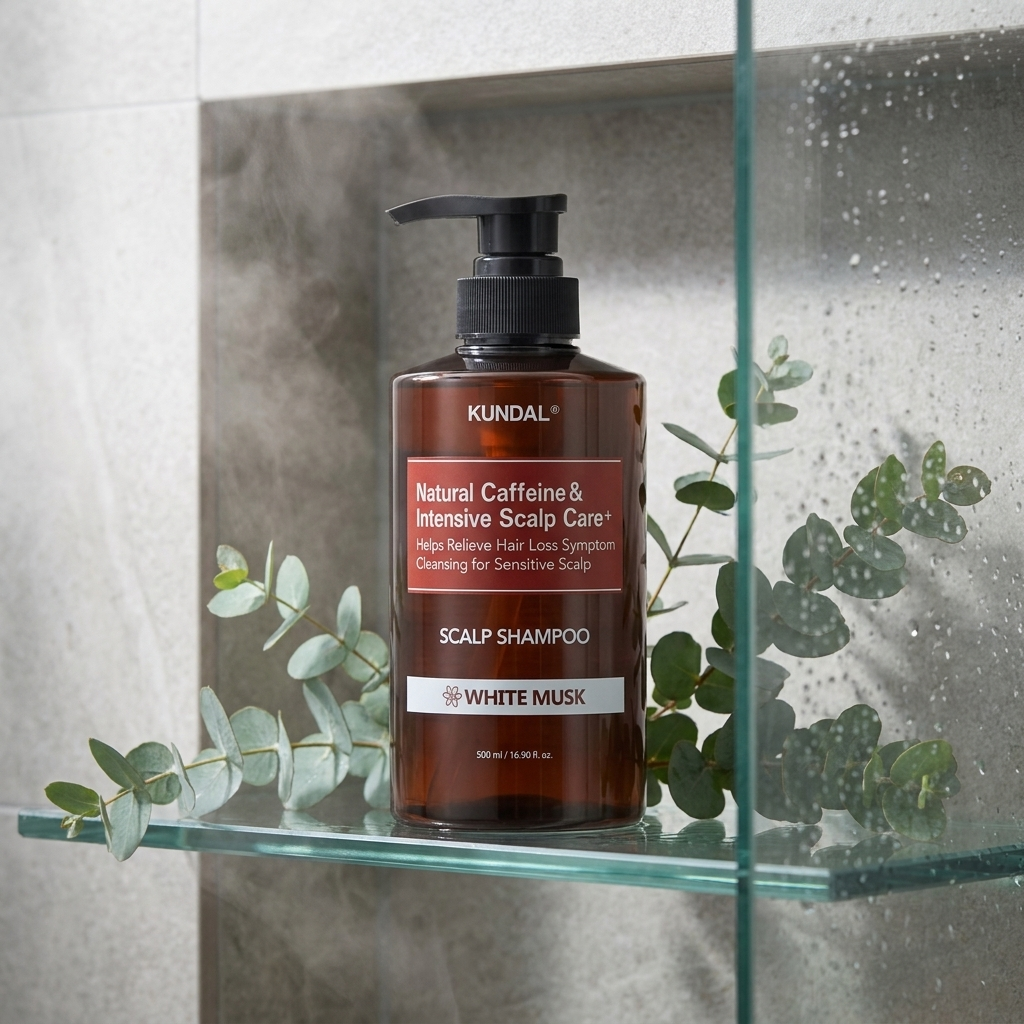
After exfoliating, your scalp is ready to absorb—now it’s all about what you put on it. A mild shampoo with invigorating caffeine is a smart choice: The KUNDAL Caffeine Shampoo White Musk gently cleanses, combines caffeine with biotin, and leaves your scalp feeling fresh and nourished without drying it out. To learn what caffeine can—and can’t—do for your scalp, read our guide on the effects of caffeine shampoo. Our guide to Korean shampoo explains why Korean hair care generally relies on mild surfactants and scalp care.

Pre-Wash Oil: Follow-Up Care for Dry Scalps
Those prone to a dry scalp can also benefit from a pre-wash oil: a hair oil that works before washing and gently nourishes the scalp before the shampoo cleanses it. The HAIR SYRUP Zen Pre-Wash Oil with lavender and chamomile is specifically designed for sensitive, dry scalps; for oily roots with dandruff, the refreshing HAIR SYRUP Mint Condition with peppermint is a better fit. Our guide to pre-wash hair oil explains exactly how pre-wash oiling works and which application times have proven effective.

A sensible weekly routine for dry scalps looks like this: a scalp scrub once a week, pre-wash oil one to two times before washing, plus a mild shampoo with every hair wash. You can find other suitable products in our Scalp Care category.
Common Mistakes When Exfoliating the Scalp
- Rubbing too roughly: Pressure is no substitute for active ingredients. Gentle, circular motions are all you need.
- Rinsing with water that’s too hot: Hot water strips the scalp of its natural oils and increases dryness.
- Exfoliating too often: More than once or twice a week irritates the skin instead of nourishing it.
- Exfoliating on irritated skin: Skip exfoliation if you have open scratches, sunburn, or recently colored hair.
- Forgetting follow-up care: After exfoliating, the scalp needs moisture and gentle care—otherwise, the cycle starts all over again.
Available in-store
Hair care for the scalp and lengths
KUNDAL, HAIR SYRUP, and more—shipped from our Swiss warehouse within 24 hours.
Discover hair care →Frequently Asked Questions About Scalp Exfoliation
How often should I use a scalp scrub?
Once a week is a good frequency for most scalp types. For very dry or sensitive scalps, exfoliating every two weeks is sufficient. More important than the frequency is consistency—and a nourishing follow-up routine.
Does a scalp scrub help with dandruff?
Exfoliation removes loose skin flakes, styling residue, and excess sebum—which reduces visible dandruff. However, it doesn’t treat the underlying cause: If you have persistent, widespread, or inflamed dandruff, you should have your scalp examined by a dermatologist.
Which is better: mechanical or chemical scalp exfoliation?
Both work. Mechanical scrubs with fine particles or a silicone brush work immediately and provide a noticeable feeling of freshness. Chemical scrubs with BHA (salicylic acid) gently dissolve sebum and flakes without scrubbing—ideal for sensitive scalps. The key is gentle, proper application.
Can I use a scalp exfoliator on colored hair?
Generally yes, but not immediately after coloring: Wait a few days after coloring to allow your scalp to settle. Then use a gentle exfoliator and follow up with a mild, color-safe shampoo.
What should I do for my scalp after exfoliating?
Wash and condition gently: use a gentle shampoo—for example, one containing caffeine—and, if you have a dry scalp, apply a pre-wash oil regularly before shampooing. This keeps your scalp supple and helps the fresh feeling last longer.
For Retailers: Do you run a perfume shop, pharmacy, drugstore, or online beauty store in Switzerland? As an official distributor, BONSANA supplies you with KUNDAL, HAIR SYRUP, and other curated beauty brands—become a retailer now.


