



Active Ingredients Glossary · P
INCI: Peptides (including Matrixyl / Palmitoyl Peptides)
Peptides are the communication experts of skincare: short chains of amino acids that send signals to the skin—such as to produce more collagen. They're considered a gentle alternative to retinol and are exceptionally well-tolerated. The research is promising but mixed—we're being honest about it.
What are peptides?
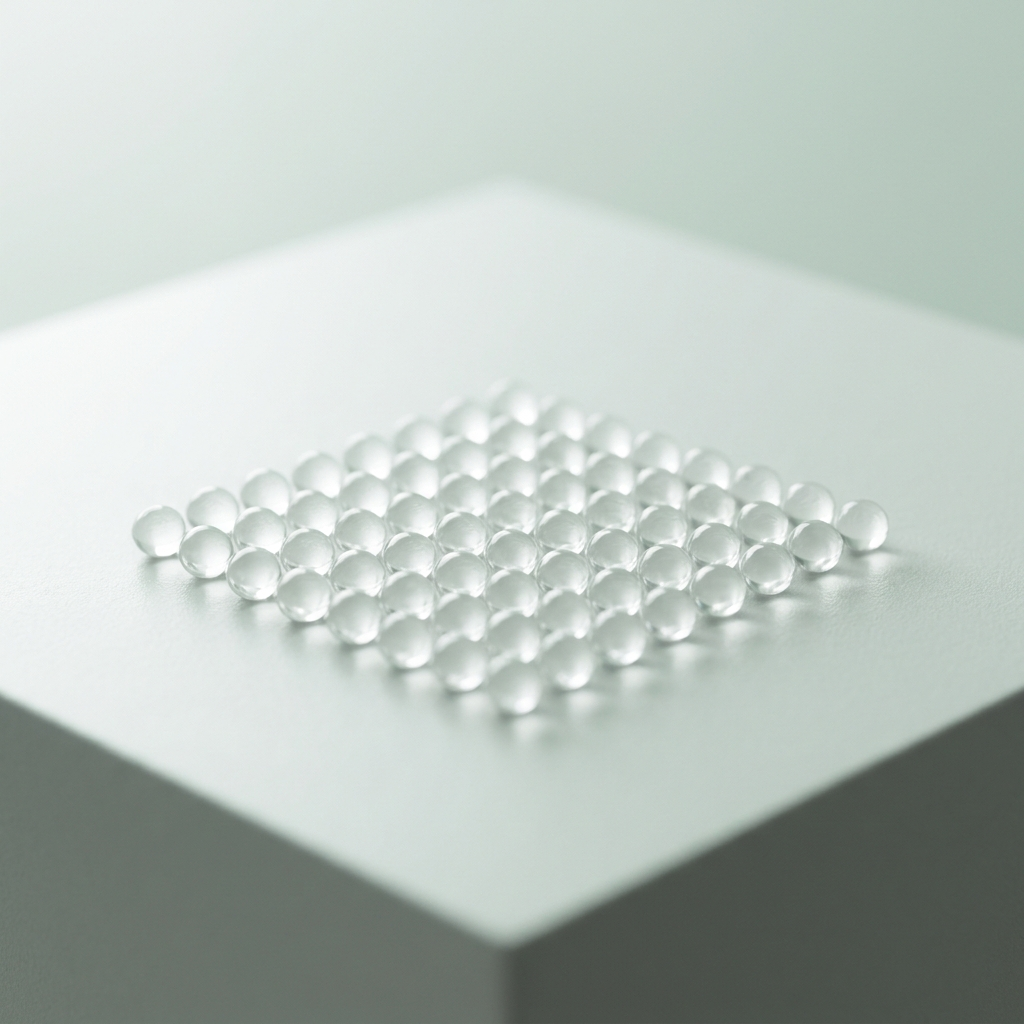
Peptides are short chains of amino acids—the same building blocks that make up proteins such as collagen and elastin. In skincare, they act as signaling molecules: Certain peptides resemble fragments produced during the natural breakdown of collagen. When they appear on the skin, the skin interprets this as a signal to boost collagen production.
The best-known example is Matrixyl (palmitoyl peptides), often referred to as Matrixyl 3000. There are also carrier peptides that transport trace elements, and other signaling peptides that work on a similar principle. To ensure that peptides can penetrate the skin at all, they are usually linked to a fatty acid—hence the "palmitoyl" in the name.
Effectiveness: What the Evidence Shows
Honesty is called for here: three out of five bars, because the body of research is promising but heterogeneous. For Matrixyl peptides, there are several small clinical studies showing a visible reduction in fine lines and improved skin elasticity after eight to twelve weeks. However, many of these studies were co-funded by manufacturers, and large, independent comparative studies are lacking. Fair summary: Peptides are a plausible, very well-tolerated anti-aging ingredient—the effects are moderate and require patience. Those looking for the most well-documented active ingredient will still turn to retinol; those who cannot tolerate retinol will find peptides to be a gentle alternative.
Application & Combination
Peptides are straightforward: they can be used in the morning and evening, require no adjustment period, and do not cause increased sun sensitivity. Apply as a serum after cleansing, or as a cream or eye care product to finish your routine. They're also ideal for the thin skin around the eyes.
Pairs well with
✓ Hyaluronic acid – hydration plumps the skin, while peptides work over the long term
✓ Niacinamide – strengthens the skin barrier without any interactions
✓ Retinol – use alternately or in combination for more comprehensive anti-aging
Note
! Immediately after strong acid peels, peptides may lose their effectiveness—space them out
! Results take 8–12 weeks—peptides do not provide immediate results
Peptides in the BONSANA lineup
Shop Now
Discover anti-aging with peptides
Eye creams, serums, and creams with peptides—trusted brands, ready to ship from our warehouse in Switzerland.
View the anti-aging collection →Frequently Asked Questions About Peptides
Are peptides better than retinol?
No—retinol has been much more extensively researched and is more potent. Peptides, however, score points for their tolerability: no irritation, no adjustment period, and no sun sensitivity. For sensitive skin, they're often the more practical choice.
How long does it take for peptides to work?
Plan on eight to twelve weeks of regular use before you can fairly assess their effects on fine lines and elasticity. Any immediate effect—such as that from cooling eye pads—is due to hydration, not the peptides themselves.
What is Matrixyl 3000?
A patented complex of two palmitoyl peptides and the most well-known peptide active ingredient of all. If it appears on the INCI list (Palmitoyl Tripeptide-1, Palmitoyl Tetrapeptide-7), it contains a precisely dosed signal peptide complex.
Can I combine peptides with vitamin C?
Yes, with one caveat: Pure ascorbic acid is very acidic and can destabilize some peptides. The easiest way is to apply them at different times—vitamin C in the morning, peptides in the evening—or to use a gentle vitamin C derivative.


