



A pimple almost always pops up when it’s least convenient: before a meeting, before a date, on the morning of an important day. And the first impulse is usually the worst—touching it, squeezing it, making it worse.
Pimple patches promise a better way: stick them on, leave them alone, and let them heal. But what can these little hydrocolloid patches really do—and what are their limitations? Here’s the honest answer, without any promises of a miracle cure.
How Pimple Patches Work: How Hydrocolloid Works
Hydrocolloid originally comes from professional wound care. The material consists of swellable particles that absorb fluid and convert it into a gel. When you apply a hydrocolloid patch to a pimple, three things happen simultaneously: the patch seals the area airtight, it absorbs any fluid seeping from the wound, and it creates a moist environment in which the skin can regenerate more effectively than under a dry scab.
The often-underestimated fourth effect is mechanical: The patch acts as a physical barrier. You can’t reach the pimple with your fingers, you won’t squeeze it, and you won’t introduce bacteria into the inflamed area. It’s precisely this squeezing that’s the most common reason why a small pimple turns into weeks of redness or even a mark.
The white dot on the patch—what is it?
When you peel off the patch after a few hours, you’ll often see a white, slightly raised dot. This is secretion absorbed from the pimple that has been bound and thickened by the hydrocolloid—visible proof that the patch has worked.
Which pimples are patches suitable for—and which aren’t?
Let’s be honest here. Hydrocolloid patches work best on “ripe,” superficial pimples—that is, where a white head is already visible or the area is open and can release fluid. That’s exactly when the hydrocolloid has something to absorb.
With deep, underground pimples, it’s a different story: The inflammation is beneath the skin, no fluid is seeping out, and a standard patch can’t absorb much there. It still protects the area from your fingers and friction—that’s a real benefit, but it won’t make the pimple disappear overnight. If you have recurring, painful lumps under the skin or widespread acne, you should see a doctor or dermatologist to determine the cause.
How to Use Pimple Patches Correctly
How well they work depends entirely on how you use them. Here’s how to do it right:
- Clean and dry your skin: The patch needs a clean, completely dry surface. It won’t stick to damp skin.
- Apply before your skincare routine: Apply the patch first, then apply cream or serum around it. The adhesive loses its grip on creams, oils, or makeup, and the seal is no longer airtight.
- Wear for 6 to 8 hours: It’s easiest to leave it on overnight. This gives the hydrocolloid enough time to absorb fluid—and guarantees you won’t touch the pimple.
- Replace instead of leaving on: If the patch has turned white, it has reached its capacity. Remove it, gently clean the area, and apply a fresh patch if needed.
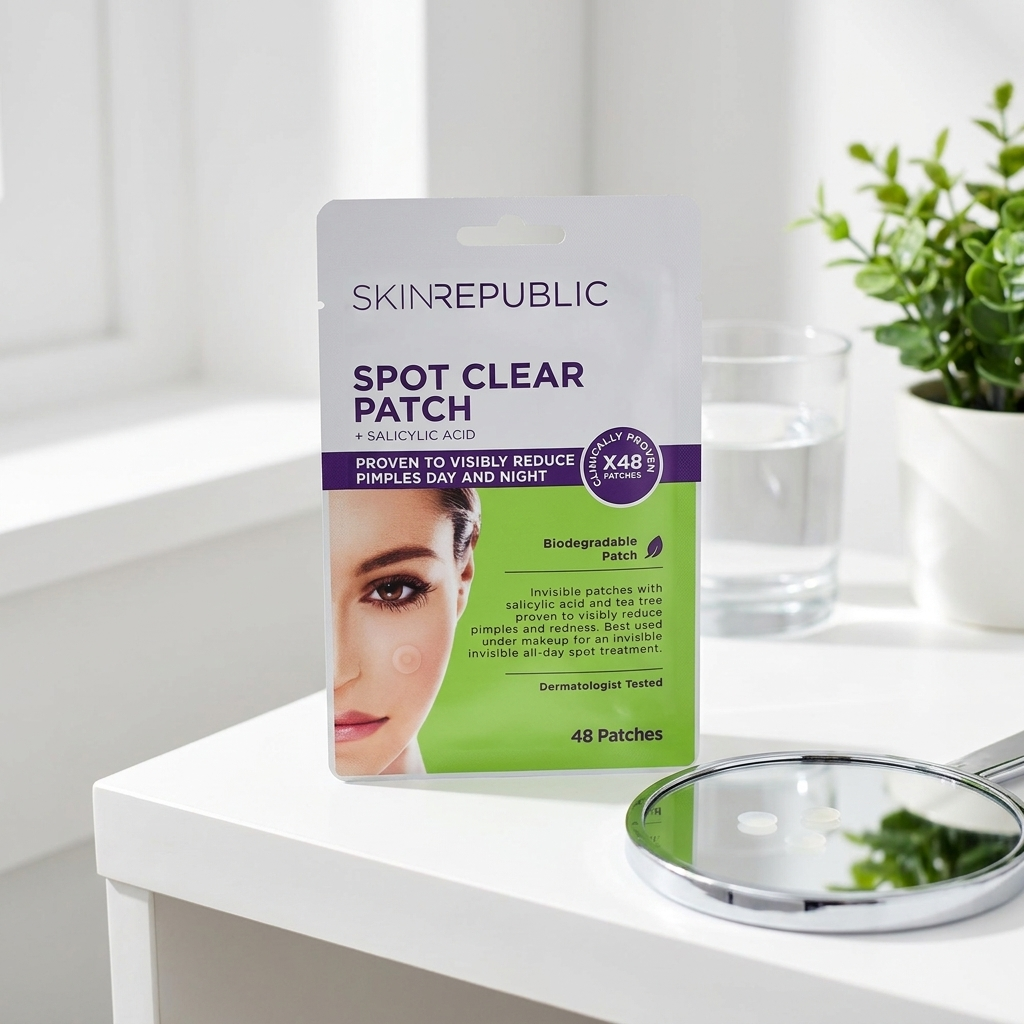
A great example of patches suitable for everyday use are the SKIN REPUBLIC Spot Clear Patches: 48 ultra-thin hydrocolloid patches in a pack for CHF 6.95. Thanks to the thin, matte material, they’re barely noticeable during the day—and at night, they quietly do their job. With 48 patches, you’re also prepared for times when multiple spots need attention at once.

What Pimple patches can’t do
A patch treats the individual spot—not the underlying cause of why it formed. Hormonal fluctuations, clogged pores, excess sebum, or unsuitable skincare can’t be “stuck away.” If new pimples keep appearing regularly, the patch is your first-aid solution, but not your long-term prevention strategy. That requires a consistent, gentle cleansing routine and patience—and, for stubborn or severe acne, a visit to a dermatologist’s office.
Prevention: Fewer Pimples from the Start
The basics are unspectacular but effective: gently cleanse your face in the morning and evening, don’t touch your face with unwashed hands, don’t squeeze pimples, and don’t dry out your skin with harsh products—that often just stimulates sebum production even more.
If your problem area is mainly the nose, blackheads are usually the precursor to the problem. This is where SKIN REPUBLIC Charcoal Nose Strips come in: six activated charcoal strips for the T-zone that remove blackheads and excess sebum from the surface of the nose before they turn into inflamed pimples.

If your skin is troubled over a large area rather than in specific spots, a sheet mask is a useful complement to the patches: The SKIN REPUBLIC Spots + Blemish Sheet Mask contains BHA (salicylic acid), which loosens dead skin cells and can penetrate the pores—providing comprehensive care for blemish-prone skin. To learn how to best use sheet masks in general, check out our face mask guide. You’ll find all of the brand’s products in the SKIN REPUBLIC collection.

Right in the shop
Pimple patches that work overnight
SKIN REPUBLIC patches, masks, and strips for blemish-prone skin—in stock in Switzerland, shipped within 24 hours.
View spot patches →Frequently Asked Questions About Pimple Patches
How long should you leave a pimple patch on?
Six to eight hours is ideal—it’s most convenient to wear the patch overnight. During this time, the hydrocolloid can absorb enough fluid. If the patch has turned white by morning, it’s done its job: remove it, gently cleanse the area, and apply a fresh one if needed. Wearing it significantly longer offers no additional benefit because its absorption capacity is limited.
Why does the patch turn white?
The white discoloration is absorbed wound fluid: fluid from the pimple that the hydrocolloid has bound and converted into a gel. So the white spot is securely sealed inside the patch and no longer on your skin. It’s the visible sign that the patch has worked—and that it’s time for a replacement.
Do pimple patches help with deep, hidden pimples?
Only to a limited extent. Hydrocolloid works best when the pimple is on the surface and can release fluid. With deep, under-the-skin pimples, the patch barely reaches the inflammation—but it protects the area from fingering, friction, and bacteria, which supports healing. You should have large, painful lumps under the skin checked by a doctor.
Can you wear pimple patches over makeup?
No, that doesn’t work reliably. On top of makeup, creams, or oils, the patch loses its adhesive strength and no longer seals the area airtight—but that’s exactly what makes it effective. Always apply the patch to clean, dry skin. The reverse works better: You can carefully apply makeup over a thin, matte patch once it’s firmly in place.
For Retailers: Do you run a pharmacy, drugstore, or perfume shop and want to add SKIN REPUBLIC to your product line? As a Swiss distributor, BONSANA AG supplies you directly from stock with fair terms and fast delivery times. Become a retailer now and benefit from the growing market for acne-fighting skincare.


